
Jujube (kul) farming
Low cost, low disease, fruit within a year. Tk 2,500-3,000 a maund at the orchard, Tk 120-200 a kilo retail in Dhaka, and a season running January to April.
- Last reviewed: 19 September 2026
- Version 1
Jujube (kul) farming
- Starting capital
- ৳70,000 – ৳2,50,000 Practitioner verified
- Manpower
- 1 – 5 people
- First sale
- 365 days Editorial estimate
- Break-even
- 13 – 16 months Editorial estimate
- Kind of work
- Farm · Easy
About the business
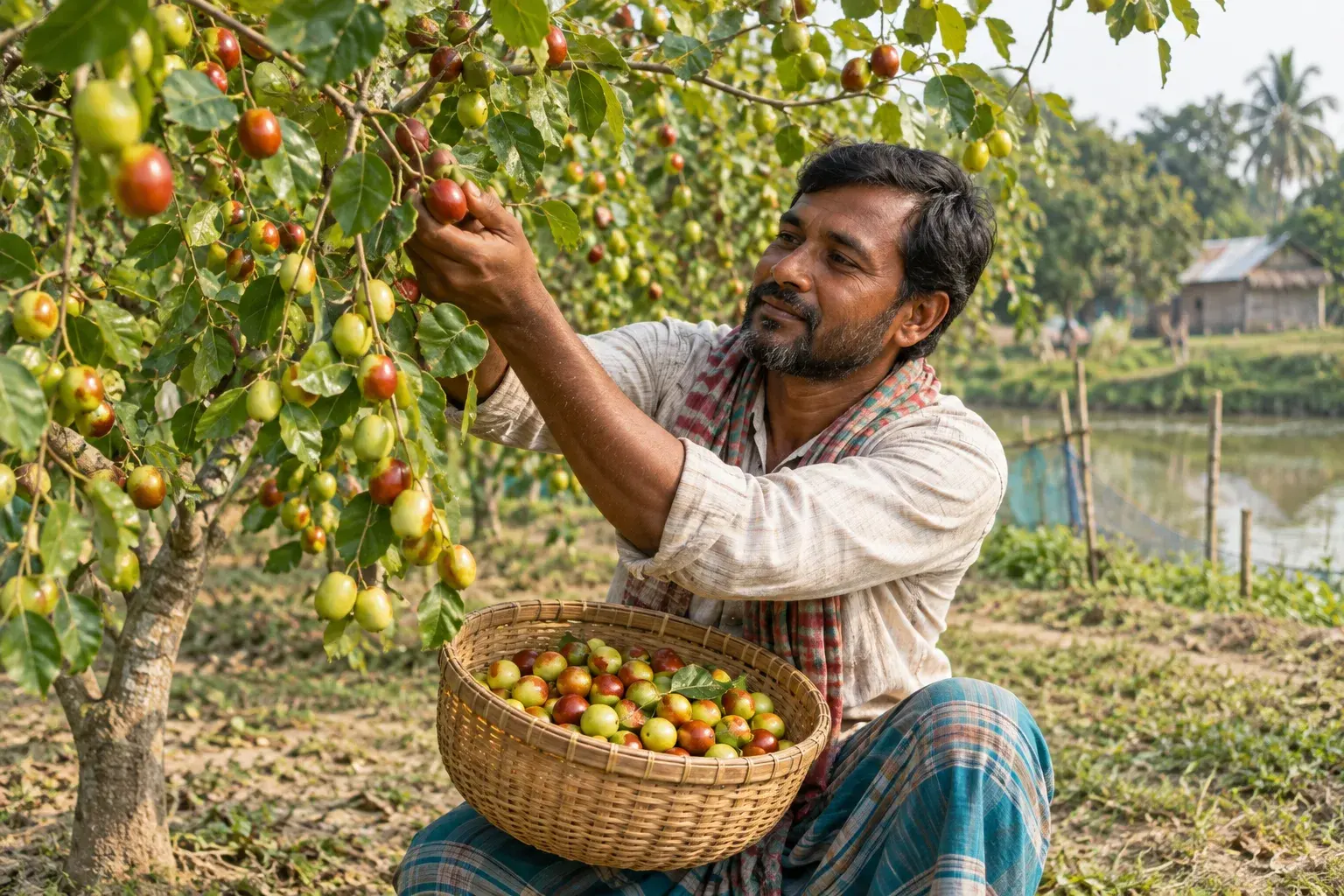
An orchard of kul, or jujube, cropping from January to April. It is the least troublesome of the fruit crops: kul is drought-tolerant, gets little disease, and a one-foot plant can give up to 20 kg within a year, at about 300 trees to an acre. The real advantage is the timing. Between January and April there is little other local fruit, local orange disappears after January, and imported apples and oranges are out of reach, so kul sells into that gap. In early February 2026 Dhaka retail was Tk 150-200 a kilo for large kul and Tk 120-150 for small local boroi, while the orchard rate was Tk 2,500-3,000 a maund, or Tk 62-75 a kilo. Nasir Hossain of Nasir Agro Farm in Magura puts the cost at about Tk 2 lakh an acre against Tk 6-7 lakh of fruit. A word of caution too. National output has gone from 95,000 tonnes in 2021-22 to 101,523 tonnes in 2024-25 - rising, but nothing like the rush into watermelon or dragon fruit. And if the branches are not pruned properly the next year's yield falls, which is the real technical risk in this crop.
Unit economics
| Item | Range | Evidence | Suggest a correction |
|---|---|---|---|
| Monthly working capital | ৳16,000 – ৳17,000 | Editorial estimate | |
| Selling price | ৳62 – ৳75 / kg | Market quote | |
| Variable cost | ৳18 – ৳25 / kg | Editorial estimate | |
| Gross margin | 60% – 75% | Editorial estimate | |
| Time to first revenue | 365 days | Editorial estimate | |
| Break-even time | 13 – 16 months | Editorial estimate | |
| Cash cycle | 240 – 330 days | Editorial estimate | |
| Waste / loss | 8% – 15% | Editorial estimate | |
| Daily capacity | 300 | Editorial estimate |
What you need to start
- Scales, baskets or crates, and a fence. Fruit bruises less when it travels in crates.Equipment
- Saplings of Bonsundori, Apple Kul, BAU Kul or Dhaka-19 from the local horticulture centre. The unit price of a sapling was not found in any source.Starting stock
- Trade licence from the union parishad, municipality or city corporation: form Tk 10, licence book Tk 50, standard tax Tk 30, stamp Tk 150-300, licence fee Tk 100-60,000 by trade type. Selling off the orchard to a byapari may not need it; running a named farm or arat does.Licence
- Pruning. In the second year everything above about a hand's length from the base is cut away, and doing it wrong cuts the yield. It is the only real skill in this crop.Skill
- A local fruit arat or byapari, and for a larger orchard direct contact with a Dhaka wholesaler.Supplier
- Land measured in acres or bighas, at about 300 trees an acre. One Magura grower works five bighas.Workspace
How the work is done
- 1Choose the variety. The most grown are Bonsundori, Apple Kul and the local Dhaka-19 and BAU Kul. BARI has released five varieties, of which Narikeli does best around Cumilla.
- 2Take saplings from the local horticulture centre. Commercial kul growing in this country spread from horticulture centres in the first place.
- 3Work out the land at about 300 trees to an acre. It is a drought-tolerant crop, so it does not need heavily irrigated land.
- 4Fence the orchard. Kul ripens in January and February, when fruit gets stolen and birds damage it.
- 5Fruit comes in the first year, but count no income before that year is out. Keep the fertiliser, weeding and labour money for it aside.
- 6In the second year cut back to about a hand's length from the base. New branches come from there, and if the pruning is not done right the yield falls. This is the main technical job in the crop.
- 7Start selling at the top of the season. It opens in January when the price is best, and drops as supply builds.
- 8Grade by size before selling. In Dhaka large kul is Tk 150-200 and small boroi Tk 120-150; sold together, the whole lot goes at the small-fruit rate.
- 9If you sell by the maund, watch the scale yourself, and know the Dhaka retail rate before you settle a price. Tk 62-75 at the orchard against Tk 150-200 in Dhaka is worth knowing when you bargain.
- 10The season is over after April. Plan the other eight months in advance: another crop on the same land, or only orchard maintenance.
Seasons
- JanHigh
- FebHigh
- MarHigh
- AprHigh
- MayNormal
- JunNormal
- JulNormal
- AugNormal
- SepNormal
- OctNormal
- NovNormal
- DecNormal
Where it works well
- Strong fitChattogram · Fifth with 3,594 tonnes, with a large urban market right there.
- Strong fitCumilla · Third with 4,128 tonnes. BARI's Narikeli variety is grown mostly here.
- Strong fitKushtia · Fourth with 3,636 tonnes.
- Strong fitMagura · Nasir Agro Farm here works five bighas of kul, and the Tk 2 lakh cost against Tk 6-7 lakh sale per acre comes from this district.
- Strong fitMymensingh · Second with 7,229 tonnes. The district deputy director says the soil suits it and good roads make marketing easy; Fulbaria and Bhaluka grow a great deal.
- Strong fitRajshahi · Rajshahi led all districts with 8,759 tonnes in 2023-24. The soil and climate suit the crop.
- PossibleDhaka · Not a growing area but the selling one: Karwan Market is the biggest retail and wholesale outlet, where large kul is Tk 150-200 a kilo.
- PossibleJhenaidah · Inside the Kushtia-Magura belt, with the same soil and the same arat network.
- PossibleMoulvibazar · There are cases of Apple and Bolsundori kul on fallow hillock land in Juri, a way of using land that is otherwise idle.
- PossibleNaogaon · Barind soil in the Rajshahi region, which suits a drought-tolerant crop.
Risks and cautions
- MediumDemand: The price falls within the season itself. It opens in January at the best rate, and Nahid Hossain, a Karwan Market seller, said in early February that prices could come down once supply rose. Fruit picked late fetches less for the same kul.
- MediumOther: Getting the pruning wrong. In the second year the plant has to be cut back to about a hand's length from the base, and improper pruning cuts the yield. The mistake only shows up a year later, when nothing can be done.
- MediumDemand: Output keeps rising: 95,000 tonnes in 2021-22, 97,000 in 2022-23, 100,818 in 2023-24 and 101,523 in 2024-25, and agriculturists and traders say the real figure may be higher than the official one. The rise is slow, but as new orchards come in the good January price will not hold.
- MediumSpoilage: Ripe kul does not keep long and bruises under pressure. Packed tight in baskets, part of the load is rejected at the other end, and there is effectively no cold storage for this fruit. No source gives a loss percentage.
- LowWorking capital: About Tk 2 lakh an acre is tied up for a year, and it comes back over the four months from January to April. For the other eight months that land earns nothing from kul.
Sources
সিটি কর্পোরেশন থেকে ট্রেড লাইসেন্স প্রাপ্তির ধাপ সমূহ
Collected: 16 Sept 2026Supports: Starting capital · বাংলাদেশ
What changed
No corrections have been published yet.
Questions and answers
No questions yet. Be the first to ask.
Stories about this business
Land leased at 15,000 taka an acre, and a kul orchard earning 10 lakh a year
He lost his NGO job in 2020 and the next year leased 2.17 acres at 15,000 taka an acre a year to plant more than 400 kul trees. The orchard yields at least 10 tons a season and brings about 10 lakh taka a year, though his price has slipped from 120 taka a kilo to 80-100.
- Ran for
- 12 months
- Reasons
- Working capital, Price drop
Similar businesses
 Agriculture & farming
Beekeeping and honey
Keeping bees in boxes and harvesting honey. Honey runs Tk 650-1,200 a kg depending on the flower, but bottling under your own name needs BSTI certification with a Tk 7,500 test fee.
- Capital
- ৳60k – ৳5 lakh
- People
- 1 – 6
- First income
- 30 – 135 days
 Agriculture & farming
Areca nut and coconut plantation
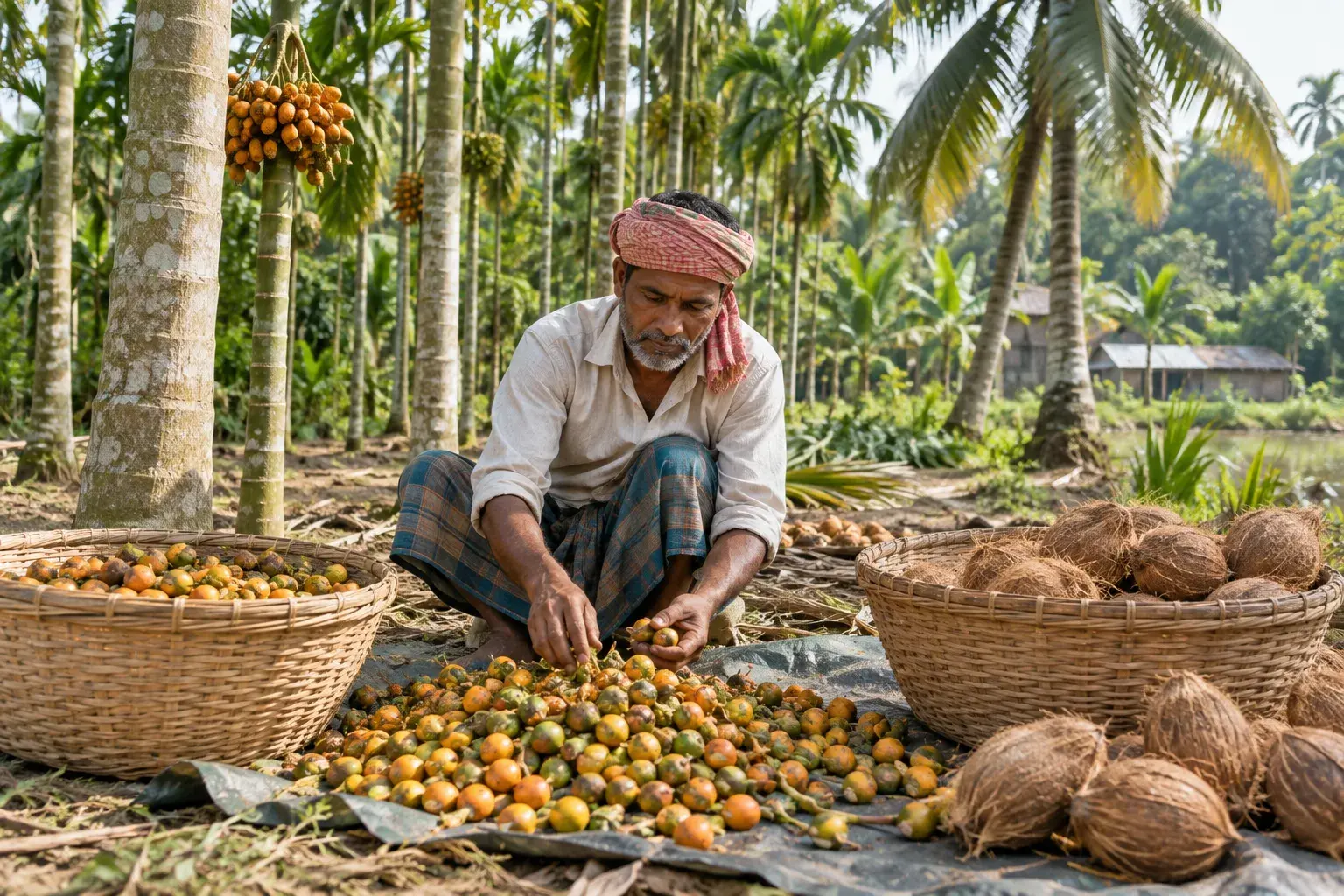
Areca and coconut planted together. Areca starts bearing in 4-5 years and coconut later still; a mature areca palm carries 200-500 nuts a year, and the Agriculture Information Service puts the profit at Tk 1-1.5 lakh an acre a year.
- Capital
- ৳60k – ৳5 lakh
- People
- 1 – 5
- First income
- 1,460 – 2,555 days
 Agriculture & farming
Poultry and duck hatchery
Setting eggs in an incubator and selling day-old chicks to farmers. Ducklings cost Tk 30-35 and sell at Tk 72-75, but chicken chick prices swing from Tk 25 to Tk 85 and back to Tk 5 within months.
- Capital
- ৳50k – ৳8 lakh
- People
- 2 – 15
- First income
- 28 – 60 days
 Agriculture & farming
Aloe vera farming
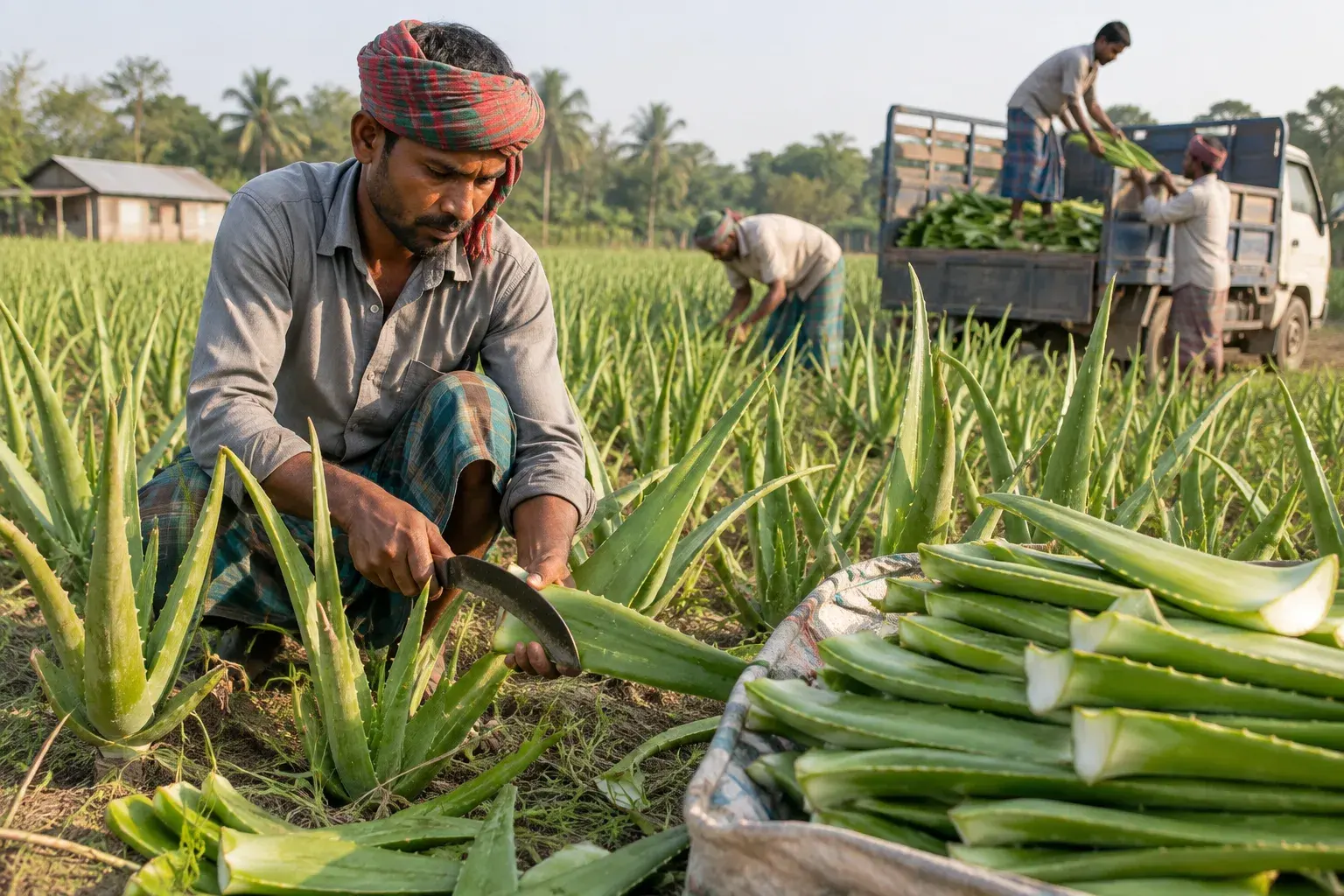
Cutting aloe leaves and selling them to companies. About Tk 50,000 a bigha to grow and Tk 1.5-2.5 lakh of leaves, but the only buyers are a few pharmaceutical and juice companies.
- Capital
- ৳50k – ৳2 lakh
- People
- 1 – 6
- First income
- 90 – 120 days