
Duck farming
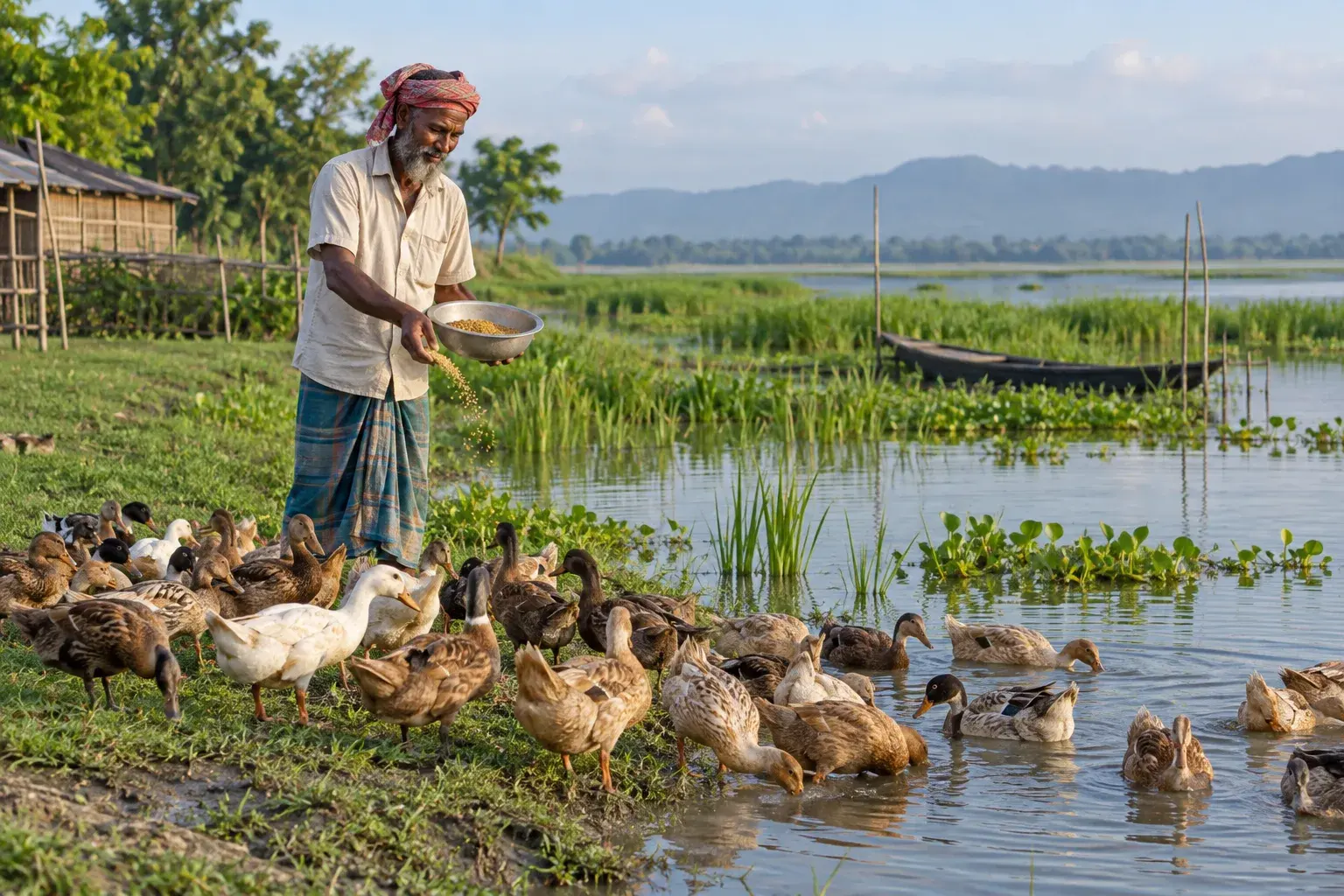
Free-range duck keeping on the haor. About 60 eggs a day per 100 ducks, feed at about Tk 2 per duck per day, and a hundred eggs selling for Tk 1,200-1,300.
- Last reviewed: 19 September 2026
- Version 1
Duck farming
- Starting capital
- ৳1,75,000 – ৳2,00,000 Editorial estimate
- Manpower
- 1 – 3 people
- First sale
- 150 – 180 days Editorial estimate
- Break-even
- 8 – 11 months Editorial estimate
- Kind of work
- Farm · Medium difficulty
About the business
Keeping ducks and selling eggs. In the haor districts farmers run them free-range: the flock goes out on the water by day, feeds itself on snails, insects and small fish, and is brought back in the evening. One farmer in the Mohanganj haor in Netrokona keeps about 2,500 Khaki Campbell ducks and gets about 1,500 eggs a day, which is roughly 60 eggs a day from every 100 ducks. One thing needs saying plainly: putting ducks on the haor does not make feed free. That same farmer spends Tk 5,000 a day on feed, about Tk 2 per duck per day, with a sack costing around Tk 3,000. The income side is under pressure - a hundred eggs that used to fetch Tk 1,800 now bring Tk 1,200-1,300. It still works, because duck eggs carry a premium: six of them sold for Tk 115 online in Dhaka on 16 September 2026, about half as much again as hen eggs. The real advantage of this trade is that it starts small - fifty ducks is a start, and no land has to be bought. But the first egg is six months away, and the flock has to be fed every one of those days.
Unit economics
| Item | Range | Evidence | Suggest a correction |
|---|---|---|---|
| Monthly working capital | ৳1,50,000 – ৳1,65,000 | Editorial estimate | |
| Selling price | ৳12 – ৳19 / unit | Market quote | |
| Variable cost | ৳3 – ৳4 / unit | Editorial estimate | |
| Gross margin | 67% – 77% | Editorial estimate | |
| Time to first revenue | 150 – 180 days | Editorial estimate | |
| Break-even time | 8 – 11 months | Editorial estimate | |
| Cash cycle | 1 – 7 days | Editorial estimate | |
| Waste / loss | 5% | Editorial estimate | |
| Daily capacity | 1,500 | Editorial estimate |
What you need to start
- Duck feed at about Tk 3,000 a sack. A 2,500-bird flock spends Tk 5,000 a day, about Tk 2 per duck per day.Starting stock
- Day-old ducklings of a laying breed (Khaki Campbell type). A 2020 budget put them at Tk 20 each; the 2026 price could not be verified.Starting stock
- Trade licence from the union parishad, municipality or city corporation: form Tk 10, licence book Tk 50, standard tax Tk 30, stamp Tk 150-300, licence fee Tk 100-60,000 by trade type, issued in 3-5 working days.Licence
- Poultry farm registration and renewal, Department of Livestock Services, through the upazila livestock office; a duck farm counts as poultry. The fee and renewal period are not published on the department's site and have to be asked for at the upazila office.Licence
- Handling the flock, counting them back in at dusk, and spotting why laying has dropped. It is not hard work, but it is every day.Skill
- A hatchery for ducklings, a feed dealer, and an egg arat or collector.Supplier
- A dry night house and open water to forage on by day: haor, beel, canal or pond. No land has to be bought, which is this trade's main advantage.Workspace
How the work is done
- 1Decide where the flock will forage first: haor, beel, canal or pond. Without open water you buy all the feed, and the arithmetic changes.
- 2Register the farm at the upazila livestock office. The Department of Livestock Services handles poultry and dairy farm registration and renewal.
- 3Choose the breed. For eggs, Khaki Campbell type birds are what is kept, including at the Netrokona haor farm.
- 4Take day-old ducklings from a hatchery you trust and keep them warm and dry for the first weeks. That is when most of the deaths happen.
- 5Build a night house: dry, with air moving through, and closed against foxes and dogs.
- 6Get the vaccination schedule from the livestock office and keep to it. One outbreak can take the whole flock.
- 7There will be no eggs for the first six months but there is feeding every day. Set the money for those six months aside before you start.
- 8Put them on the water in the morning and count them back in at dusk. Foraging cuts the bought feed, but it does not end it.
- 9Write down the eggs collected and the feed spent every day. If 100 ducks are giving fewer than 60 eggs a day, take it that something is wrong with the feed or their health.
- 10Sell the eggs daily or keep them cool. Duck eggs are heavier and more brittle than hen eggs and they break if the basket is packed too full.
- 11When laying drops, sell the old birds for meat and bring in a new batch. That meat sale is the flock's last income.
- 12Fix the rate per hundred with the arat. A hundred eggs used to fetch Tk 1,800 and now brings Tk 1,200-1,300; when the rate falls the feed bill does not, so know it in advance.
Seasons
- JanNormal
- FebNormal
- MarNormal
- AprNormal
- MayNormal
- JunHigh
- JulHigh
- AugHigh
- SepHigh
- OctHigh
- NovNormal
- DecNormal
Where it works well
- Strong fitKishoreganj · The fisheries department's haor list shows vast haors in Itna, Mithamoin and Austagram, thousands of hectares of open water, which is exactly what a free-range flock needs.
- Strong fitNetrokona · Commercial open-method farms are already running in the Mohanganj haor; one alone has about 2,500 Khaki Campbell ducks producing 1,500 eggs a day.
- Strong fitSylhet · The fisheries department's list covers Hakaluki in Fenchuganj, Muria in Beanibazar and the haors of Kanaighat and Jokiganj; open water is not in short supply.
- PossibleBarishal · A district of rivers and canals with plenty of open water, and the divisional city's egg arats close by.
- PossibleBrahmanbaria · Haor and beel country, and close enough to the Dhaka and Chattogram markets to move eggs easily.
- PossibleGopalganj · Beel and low wetland country, under water for much of the year, so the flock can forage.
- PossibleHabiganj · A haor district with open water, but no information on duck farms or egg rates here was found.
- PossibleMoulvibazar · A large part of Hakaluki haor falls in this district, giving open water to forage on.
- PossiblePirojpur · Canal and low-lying country with a long habit of duck keeping, though local farm figures could not be verified.
- PossibleSunamganj · Known as haor country, but the fisheries department table seen in this research covered Kishoreganj and Sylhet; Sunamganj's own figures could not be verified.
Risks and cautions
- HighDemand: The egg price has fallen and the feed price has not. A hundred eggs at the Netrokona haor farm used to fetch Tk 1,800 and now bring Tk 1,200-1,300, about 30 percent less, while a sack of feed is still around Tk 3,000 and the 2,500-bird flock still spends Tk 5,000 a day on it. Another 15 percent off the egg price roughly halves the profit per bird.
- HighDependency: Free-ranging cuts the feed bill but does not end it. The claim that ducks on the haor feed themselves is not the whole truth: the open-method farm in Mohanganj still spends Tk 5,000 a day, about Tk 2 a duck. A 10 percent rise in feed costs that flock an extra Tk 15,000 a month, with no guarantee the egg rate moves at all.
- HighWorking capital: The first egg is about six months away and there is feeding every one of those days. One published budget put six months of feed for 550 birds at Tk 148,500 (2020), plus Tk 22,000 for 1,100 ducklings and Tk 5,000 other, Tk 175,500 in all, every taka of it spent before any income. Run out of cash and you cut the feed, and cutting the feed cuts the eggs.
- HighOther: Disease and death. One published budget allows 5 percent mortality over the first six months, but an outbreak runs far higher. Free-range flocks mix with other flocks on open water, so disease travels fast. Skip the upazila livestock office's vaccination schedule and one outbreak can take everything.
- MediumOther: It cannot run without a person. Free-range means watching the flock on the water all day and counting them in at dusk. The Mohanganj farm pays a worker Tk 15,000 a month. Without one, birds stray, get stolen or are taken by foxes, and that loss is not covered by the egg price.
Sources
সহজিকৃত সেবার তালিকা — পোল্ট্রি ও ডেইরী খামার রেজিষ্ট্রেশন ও নবায়ন কার্যক্রম
Collected: 16 Sept 2026Supports: Starting capital · বাংলাদেশ
সিটি কর্পোরেশন থেকে ট্রেড লাইসেন্স প্রাপ্তির ধাপ সমূহ
Collected: 16 Sept 2026Supports: Starting capital · বাংলাদেশ
- Collected: 15 Sept 2026
Supports: Selling price · ঢাকা মহানগর — সিপাহীবাগ, মিরপুর-৬, মোহাম্মদপুর টাউন হল, নিউমার্কেট, রামপুরা, মহাখালী বাজার
What changed
No corrections have been published yet.
Questions and answers
No questions yet. Be the first to ask.
Stories about this business
Ducklings at 26 taka, eggs to the hatchery at 11-12
Twenty years of duck rearing. He is raising 400 ducklings bought at 26 taka each, sells eggs to hatcheries at 11-12 taka, and recently sold 200 ducks for 70,000 taka.
- Reasons
- Good location, Loyal customers
Similar businesses
 Agriculture & farming
Buffalo rearing
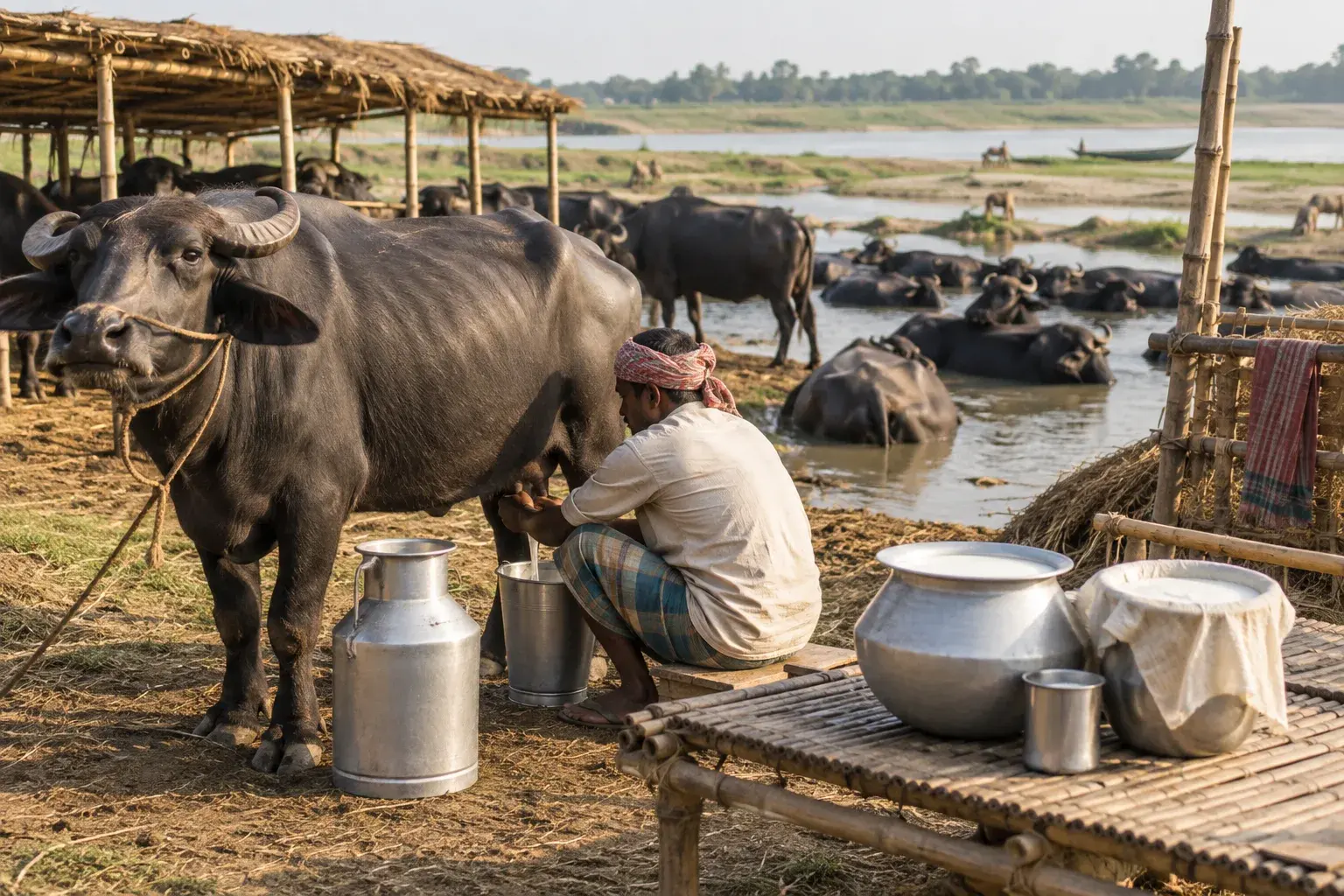
Keeping buffalo on the chars or in a bathan herd and selling the milk. A buffalo gives 4 to 8 kg of milk a day and buffalo milk fetches Tk 80 to 130 a litre, but only in districts where there are curd and sweet makers to buy it.
- Capital
- ৳1.5 lakh – ৳10 lakh
- People
- 1 – 5
- First income
- 1 – 365 days
 Agriculture & farming
Fish nursery and fry
Nursing hatchery spawn into fingerlings and selling them to fish farmers. On a government farm's 2026 targets, spawn runs about Tk 1,900 a kg and fingerlings about Tk 250 a kg.
- Capital
- ৳2 lakh – ৳22 lakh
- People
- 2 – 12
- First income
- 60 – 365 days
 Agriculture & farming
Dragon fruit farming
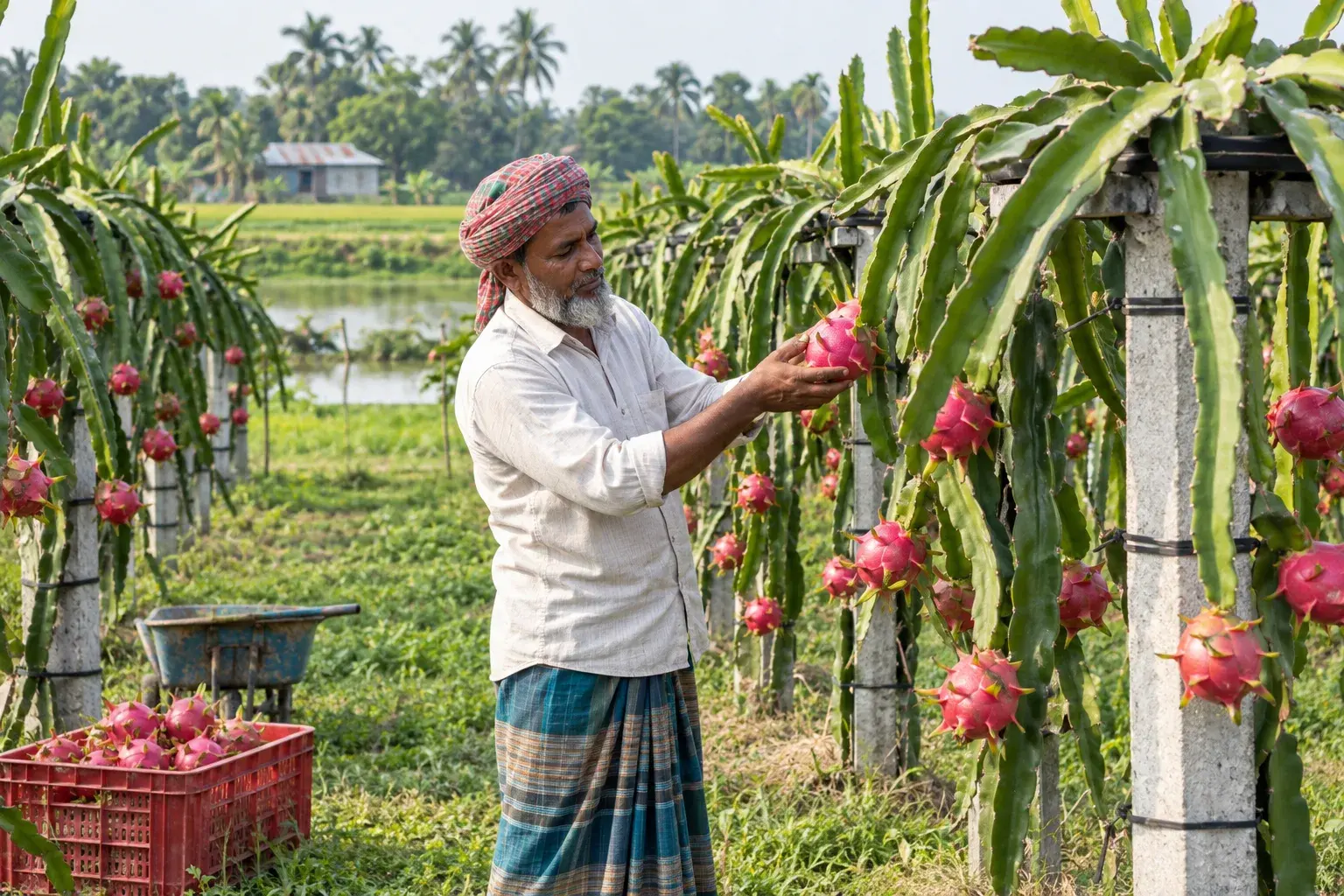
Growing dragon fruit on posts. One to four lakh taka a bigha up front, first fruit about a year later, and a price that has fallen from Tk 500 to Tk 80-100 a kilo in Karwan Market.
- Capital
- ৳1.5 lakh – ৳4 lakh
- People
- 1 – 4
- First income
- 365 days
 Agriculture & farming
Shrimp farming (gher)
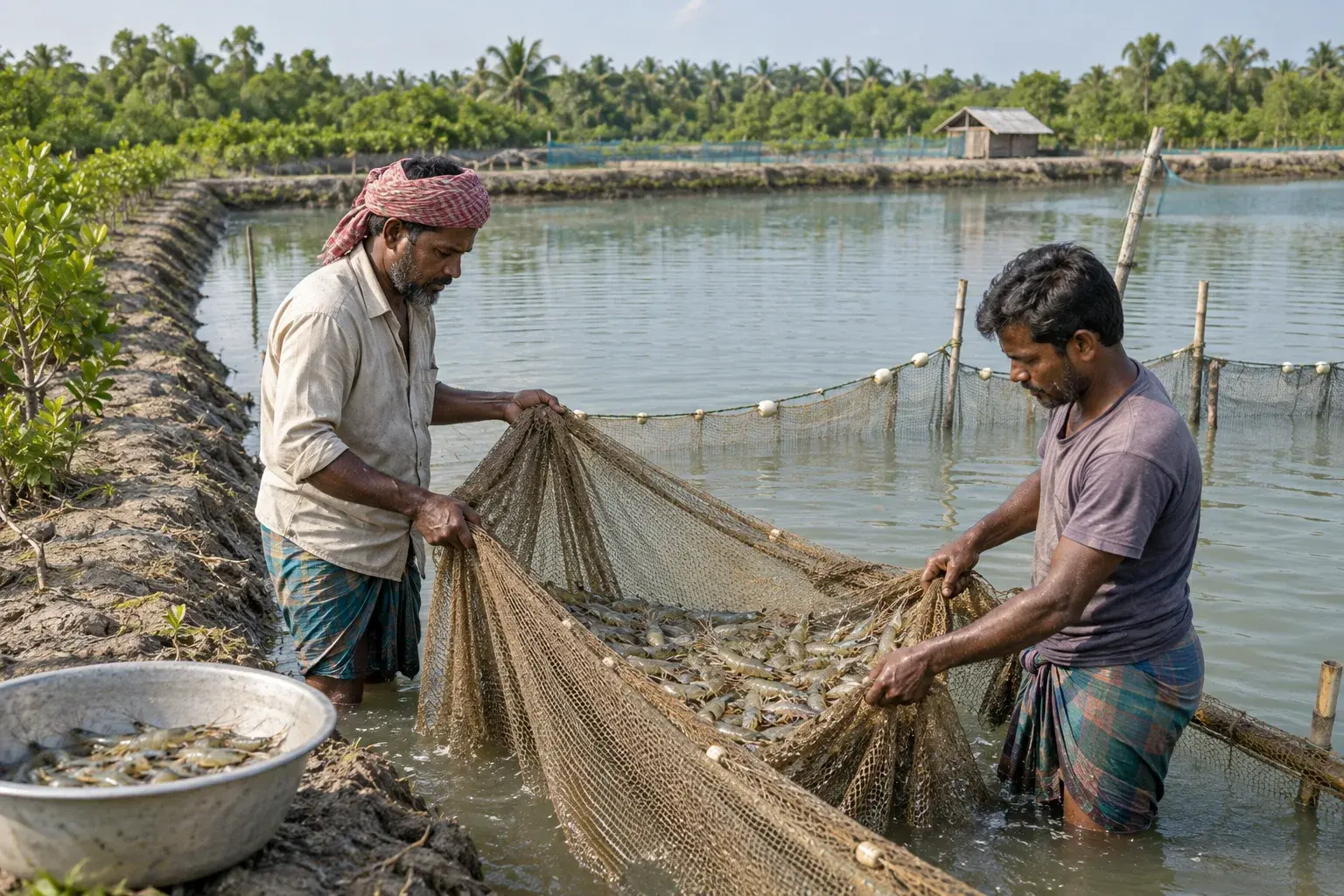
Farming bagda and golda in embanked saline ponds. Fry has gone from Tk 1,300-1,700 to about Tk 3,000 per thousand this season and southern hatcheries have fallen from 78 to 37.
- Capital
- ৳1.5 lakh – ৳6 lakh
- People
- 1 – 5
- First income
- 90 – 150 days