
Fish nursery and fry
Nursing hatchery spawn into fingerlings and selling them to fish farmers. On a government farm's 2026 targets, spawn runs about Tk 1,900 a kg and fingerlings about Tk 250 a kg.
- Last reviewed: 19 September 2026
- Version 1

Fish nursery and fry
- Starting capital
- ৳2,00,000 – ৳22,00,000 Editorial estimate
- Manpower
- 2 – 12 people
- First sale
- 60 – 365 days Editorial estimate
- Break-even
- 16 – 26 months Editorial estimate
- Kind of work
- Farm · Hard
About the business
Buy spawn from a hatchery, nurse it in a nursery pond for a few weeks, and sell it on to fish farmers as fingerlings. This is where fish farming begins, and the country's fish output rests on it. The price is by weight, not by count: on the 2026 targets of the government Baluhar fish seed farm in Jhenaidah it works out to roughly Tk 1,900 a kg for spawn and about Tk 250 a kg for fingerlings. The money arrives in a few months of the year - that same farm had booked Tk 32.08 lakh of its Tk 56.64 lakh annual target by 20 April. Mymensingh is the heart of the trade: Trishal upazila alone lands over 85,000 tonnes of fish a year from more than 24,000 privately owned ponds, with 38 private hatcheries and 110 nurseries, and the district as a whole supplies about 22 percent of national fish output. One operator's numbers make the shape clear. Abdul Aziz of Subarnachar in Noakhali started hawking fry from a bicycle and now runs 17 units over more than 15 acres: Tk 20-22 lakh invested in a season, Tk 30-35 lakh of sales, and about Tk 10 lakh of profit a year, with 12 permanent staff on Tk 9,000-18,000 a month. In this trade one night can end everything - a fall in oxygen or a sudden warm spell and the whole pond floats up. Whoever can read the water keeps the profit.
Unit economics
| Item | Range | Evidence | Suggest a correction |
|---|---|---|---|
| Monthly working capital | ৳1,08,000 – ৳2,16,000 | Practitioner verified | |
| Selling price | ৳250 – ৳1,900 / kg | Editorial estimate | |
| Variable cost | ৳175 – ৳1,300 / kg | Editorial estimate | |
| Gross margin | 29% – 33% | Practitioner verified | |
| Time to first revenue | 60 – 365 days | Editorial estimate | |
| Break-even time | 16 – 26 months | Editorial estimate | |
| Cash cycle | 30 – 75 days | Editorial estimate | |
| Waste / loss | 20% – 40% | Editorial estimate | |
| Daily capacity | 8 – 90 | Editorial estimate |
What you need to start
- Drag and cast nets, hapa enclosures, drums and oxygenated polythene bags for moving fry, a water pump, and accurate scales.Equipment
- Spawn bought from a hatchery, fish feed, lime and fertiliser. At government farm rates spawn is about Tk 1,900 a kg.Starting stock
- Trade licence from the union parishad, municipality or city corporation: form Tk 10, licence book Tk 50, standard tax Tk 30, stamp Tk 150-300, licence fee Tk 100-60,000 by trade type.Licence
- Farm and hatchery registration at the Upazila Fisheries Officer's office under the Department of Fisheries. The fee, validity and conditions must be taken from your own upazila office; they could not be verified for this page.Licence
- Reading the water: judging oxygen from its colour, its smell and how the fry behave at dawn, and keeping out predators and disease.Skill
- A dependable hatchery for spawn, a feed mill or dealer, and a network of hawkers and fry traders to sell through. Trishal upazila alone has 38 private hatcheries and 28 feed crushing mills.Supplier
- Small shallow nursery ponds that can be dried out and refilled. Trishal upazila alone has 24,498 privately owned ponds over 3,125 hectares.Workspace
How the work is done
- 1Pick small shallow ponds for a nursery, ones that hold water and can also be dried out completely when needed.
- 2Dry the pond out, clear predatory fish and frog and snake eggs, then lime it. Skip this and much of the spawn you release is eaten in the first week.
- 3Register the farm with the Upazila Fisheries Officer, take their advice, and get a trade licence.
- 4Fix a dependable hatchery and book the day you will collect the spawn. How long the spawn spends on the road decides how much of it survives.
- 5Build up natural food in the pond before releasing the spawn, and release at dawn or dusk, never in the midday sun.
- 6Walk the pond bank at first light every day. Fry gulping at the surface means the oxygen has dropped, and the water must be stirred or fresh water let in at once.
- 7Measure the feed and write down what you gave. Fish feed prices are climbing, and this is the line that eats the most of the margin.
- 8Sell by weight and do the count-to-weight arithmetic in front of the buyer. Spawn and fingerlings carry different rates.
- 9Move fingerlings in oxygenated polythene bags or drums, and send them in the early morning. In the midday heat most of them die on the road.
- 10Build up a line of hawkers and fry traders. One Subarnachar operation reaches the market through 60 fry sellers and fish traders.
Seasons
- JanLow
- FebNormal
- MarHigh
- AprHigh
- MayHigh
- JunHigh
- JulHigh
- AugNormal
- SepNormal
- OctNormal
- NovLow
- DecLow
Where it works well
- Strong fitMymensingh · About 22 percent of national fish output comes from this district; Trishal upazila alone has 38 private hatcheries, 110 nurseries and 24,498 privately owned ponds, and the Fisheries Research Institute is here.
- Strong fitNoakhali · Fry farming has scaled up in Subarnachar: one operation alone turns out 1 to 1.5 crore spawn and fingerlings a year and 60 hawkers and traders depend on it.
- PossibleBogura · The northern trading hub, with fry markets and transport both available and pond numbers rising in the districts around it.
- PossibleCumilla · Dense pond aquaculture, and fry can be sent out at dawn along the Dhaka-Chattogram highway.
- PossibleJamalpur · Low land beside the Jamuna carries many ponds and enclosures, and it sits inside the Mymensingh supply belt.
- PossibleJhenaidah · Every private fish seed farm in the district has closed and the one government farm is crippled by staff shortages, so the demand is there and the supply is not.
- PossibleNetrokona · A haor and beel district where restocking demand after the monsoon is large, with the Mymensingh hatcheries close by.
- PossibleSatkhira · Both enclosure and freshwater farming are practised, so demand for white fish fingerlings is available locally.
Risks and cautions
- HighSpoilage: A pond of fry can be finished in one night. An oxygen crash, a sudden warm spell or heavy rain overtopping the bank takes the whole stock, and two months of feed and work with it. It happens on the road too: fry sent in oxygen bags in the midday sun arrive largely dead.
- HighWorking capital: Income piles up in a few months while ponds, feed and staff cost all twelve. The Jhenaidah government farm had taken more than half its annual income by 20 April, so the remaining eight months bring little. On a 15-acre operation the wage bill for 12 permanent staff alone is Tk 108,000-216,000 a month.
- HighDependency: You cannot make your own spawn; you depend on a hatchery, and if it closes the next one is districts away. In Jhenaidah every private fish seed farm has shut, leaving the whole district on one government farm that has 11 people in post against 28 sanctioned.
- MediumDemand: Your buyers are fish farmers, and their condition decides your sales. Farmers in Trishal say feed prices are rising abnormally and margins are shrinking; when they stock fewer fry your stock stays unsold, and once fingerlings outgrow their size they no longer fetch the nursery rate.
Sources
সিটি কর্পোরেশন থেকে ট্রেড লাইসেন্স প্রাপ্তির ধাপ সমূহ
Collected: 16 Sept 2026Supports: Starting capital · বাংলাদেশ
What changed
No corrections have been published yet.
Questions and answers
No questions yet. Be the first to ask.
Stories about this business
From selling fry off a bicycle to 17 hatcheries and 10 lakh a year
He started in 2012 on 20 decimals of inherited land with a 20,000-taka NGO loan. Seventeen hatcheries over 15 acres now produce 1 to 1.5 crore renu and fry a year, leaving about 10 lakh taka of net income.
- Capital
- ৳20k
- Reasons
- Strong network, Working capital
Similar businesses
 Agriculture & farming
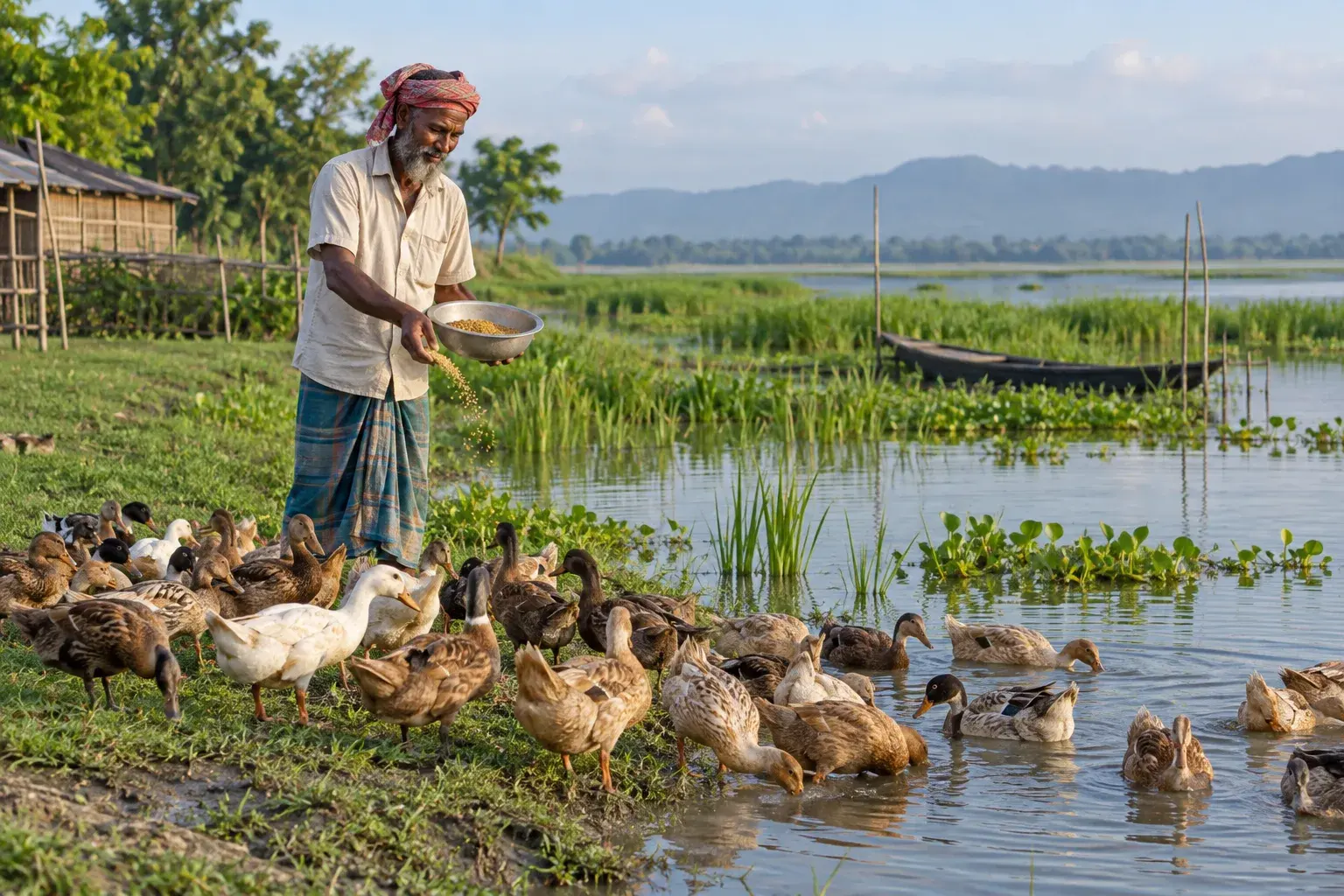
Duck farming
Free-range duck keeping on the haor. About 60 eggs a day per 100 ducks, feed at about Tk 2 per duck per day, and a hundred eggs selling for Tk 1,200-1,300.
- Capital
- ৳1.8 lakh – ৳2 lakh
- People
- 1 – 3
- First income
- 150 – 180 days
 Agriculture & farming
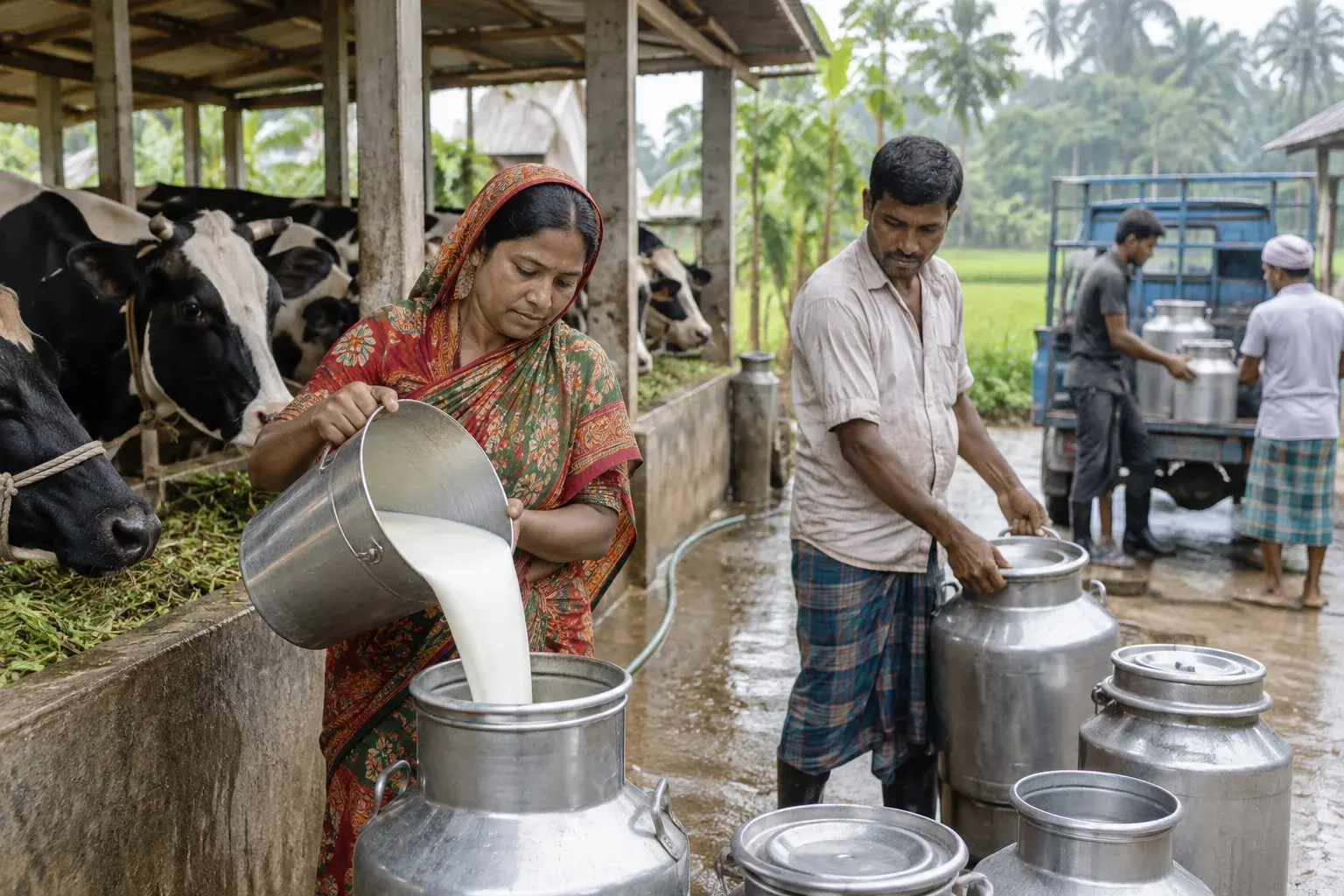
Dairy cattle farm
Rearing milch cows and selling milk daily. Milk Vita pays Tk 45-47 a litre and the open market about Tk 55, against a farmer-stated cost of roughly Tk 32.5 a litre. Output halves for three monsoon months.
- Capital
- ৳2.5 lakh – ৳12 lakh
- People
- 1 – 6
- First income
- 7 – 60 days
 Agriculture & farming
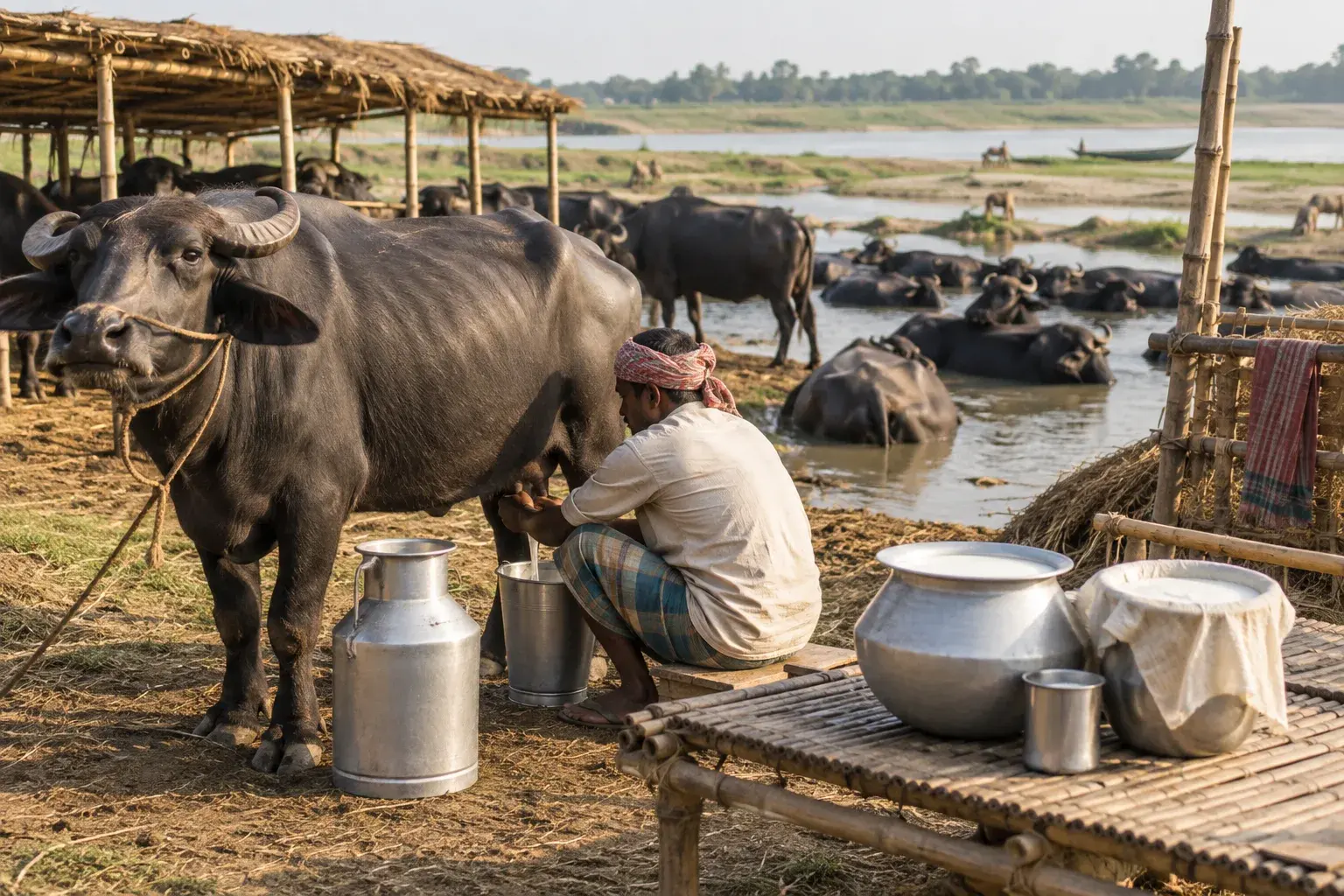
Buffalo rearing
Keeping buffalo on the chars or in a bathan herd and selling the milk. A buffalo gives 4 to 8 kg of milk a day and buffalo milk fetches Tk 80 to 130 a litre, but only in districts where there are curd and sweet makers to buy it.
- Capital
- ৳1.5 lakh – ৳10 lakh
- People
- 1 – 5
- First income
- 1 – 365 days
 Agriculture & farming
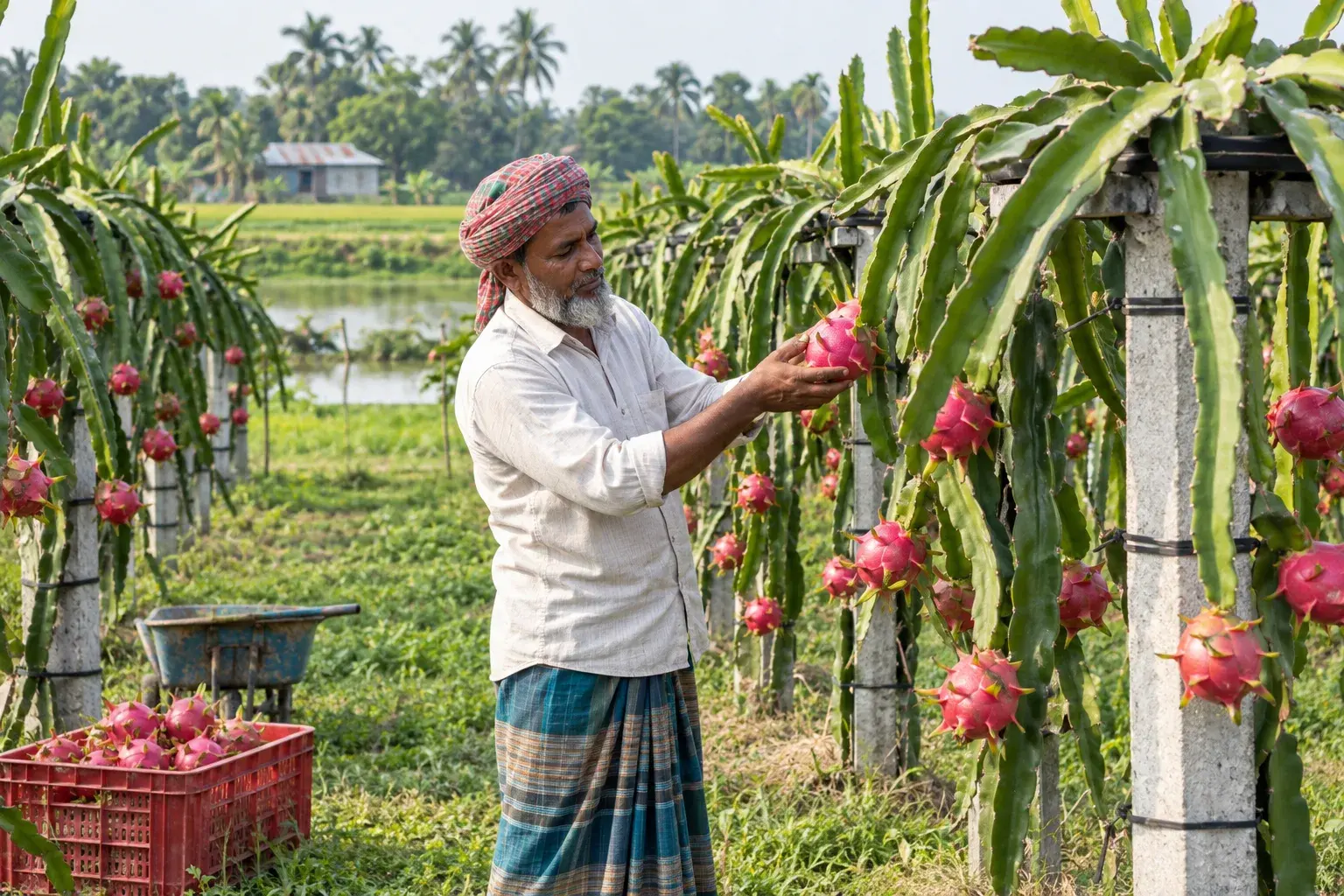
Dragon fruit farming
Growing dragon fruit on posts. One to four lakh taka a bigha up front, first fruit about a year later, and a price that has fallen from Tk 500 to Tk 80-100 a kilo in Karwan Market.
- Capital
- ৳1.5 lakh – ৳4 lakh
- People
- 1 – 4
- First income
- 365 days