
Malta and orange farming
Orchards of green malta and orange. National output went from 17,000 to 84,000 tonnes in six years, and local malta in Dhaka has fallen to Tk 80-120 a kilo.
- Last reviewed: 19 September 2026
- Version 1

Malta and orange farming
- Starting capital
- ৳90,000 – ৳3,00,000 Editorial estimate
- Manpower
- 1 – 4 people
- First sale
- 730 – 1,095 days Editorial estimate
- Break-even
- 30 – 48 months Editorial estimate
- Kind of work
- Farm · Medium difficulty
About the business
Growing green malta and orange in an orchard and selling the fruit. This page is here to make you check the arithmetic before the price falls, not to encourage planting. The state has pushed malta for years as an import substitute: a citrus project on the hills in 2005, then a 2019 extension into 123 upazilas across 30 districts. National output went from 17,000 tonnes on 2,433 hectares in 2018-19 to more than 84,000 tonnes on roughly eight thousand hectares in 2024-25 - five times the supply in six years, and the price has followed it down. Local malta that sold around Tk 150 a kilo a few years ago was Tk 80-120 in Dhaka in September 2025, and in Chimbuk, Bandarban, grower Prente Mro says middlemen take it off him at Tk 30-40. There is money in it when the price holds: Protibindu Dewan in Khagrachhari spent Tk 2.15 lakh on two and a half acres and sold Tk 6 lakh of fruit. But that depends on picking ripe and selling direct. Agriculture officer Methuiching Marma says growers pick unripe in early September, so the fruit never colours and fetches less. Before you plant a single sapling, go to the upazila agriculture office and find out how much land near you is already under malta.
Unit economics
| Item | Range | Evidence | Suggest a correction |
|---|---|---|---|
| Monthly working capital | ৳7,000 – ৳18,000 | Editorial estimate | |
| Selling price | ৳30 – ৳120 / kg | Market quote | |
| Variable cost | ৳20 – ৳30 / kg | Editorial estimate | |
| Gross margin | 0% – 64% | Editorial estimate | |
| Time to first revenue | 730 – 1,095 days | Editorial estimate | |
| Break-even time | 30 – 48 months | Editorial estimate | |
| Cash cycle | 180 – 300 days | Editorial estimate | |
| Waste / loss | 5% – 20% | Editorial estimate | |
| Daily capacity | 8 – 27 | Editorial estimate |
What you need to start
- Irrigation: a water storage tank on the hills, a pump and pipe. Without water in the dry season the fruit stays small.Equipment
- Saplings of BARI Malta-1 or the Vietnamese type from a government horticulture centre or nursery. The unit price of a sapling could not be verified.Starting stock
- Trade licence from the union parishad, municipality or city corporation: form Tk 10, licence book Tk 50, standard tax Tk 30, stamp Tk 150-300, licence fee Tk 100-60,000 by trade type. Selling straight off the orchard may not need it; opening a stall or arat does.Licence
- Knowing when the fruit is actually ripe. Picked unripe it never colours, and uncoloured fruit sells at half the price.Skill
- A buyer for the fruit: a local arat, a byapari or a district-town fruit shop. With only one buyer, he sets the price.Supplier
- High, well-drained land, either hill slope or high flat land. One Khagrachhari grower works two and a half acres; a Bandarban grower has about 250 plants.Workspace
How the work is done
- 1Go to the upazila agriculture office first. How much land near you is already under malta, and what did growers actually get per kilo last season? Do not buy a sapling before you know both.
- 2Pick high, well-drained land in full sun. Hill slopes and high flat land both work, but water standing at the base kills the plant.
- 3Fix the variety. BARI Malta-1 and a Vietnamese type are what the hills grow; BARI Malta-1 has adapted well to the local climate. Write down which variety you bought.
- 4Take saplings from a government horticulture centre or a nursery you know. Buy without knowing the variety and you find out three years later, when nothing can be done.
- 5Put in irrigation. Water is short on the hills, so monsoon water has to be stored in tanks.
- 6Budget no income for the first two or three years. Keep the money for fertiliser, weeding and labour for that period aside.
- 7Flowers come in March and April and the fruit comes off in September and October. It ripens by mid-September in the hills and the 24 coastal districts, and around November towards Dinajpur.
- 8Do not pick before the fruit is ripe. Picking unripe in early September leaves it uncoloured and cuts the price, in the words of the assistant agriculture officer.
- 9Finish selling before the cold sets in. Local malta loses juice once winter starts, and once it does the buyer walks away.
- 10Do not hand the whole orchard to a middleman. The grower in Chimbuk getting Tk 30-40 at the orchard is selling fruit that retails at Tk 80-120 in Dhaka. Build a direct route to district-town shops or to buyers who come to the orchard, before the crop is ready.
- 11Grade by size and colour before selling. Sold as one lot, the whole consignment goes at the poor-fruit rate.
Seasons
- JanLow
- FebLow
- MarNormal
- AprNormal
- MayNormal
- JunNormal
- JulNormal
- AugNormal
- SepHigh
- OctHigh
- NovHigh
- DecNormal
Where it works well
- Strong fitBandarban · Bandarban leads national malta output: 4,686 tonnes on 1,197 acres. Thousands of growers work the slopes at Rowangchhari and Chimbuk, but water is short and the middleman's price is low.
- Strong fitKhagrachhari · Second by district and the largest by volume: 5,839 tonnes on 1,560 acres. One grower here spent Tk 215,000 on two and a half acres and sold Tk 6 lakh of fruit.
- Strong fitRajshahi · The DAE horticulture wing puts Rajshahi third among districts, so this is now a large flat-land crop as well.
- Strong fitRangamati · Third of the three hill districts with 2,518 tonnes on 662 acres. The Rangamati region as a whole is 17.72 percent of national output.
- PossibleBhola · The six Barishal districts produce 10,460 tonnes on 1,607 acres, the second region nationally. In the coastal districts the fruit ripens by mid-September.
- PossibleCox's Bazar · The five Chattogram-region districts produce 5,164 tonnes on 2,007 acres, the third region. Selling direct to tourists off the orchard is possible here.
- PossibleDinajpur · Malta ripens here in November, after the hill crop has left the market. A late crop faces less competition.
- PossibleMoulvibazar · Hillocks with good drainage, and the Sylhet region has an older tradition of orange growing, though district-level malta output here could not be verified.
- PossiblePatuakhali · Part of the Barishal region and one of the 24 coastal districts where malta ripens in mid-September.
- PossiblePirojpur · One of the six Barishal districts that together produce 10,460 tonnes of malta.
Risks and cautions
- HighDemand: Supply is rising and the price is falling. National output went from 17,000 tonnes on 2,433 hectares in 2018-19 to over 84,000 tonnes on about eight thousand hectares in 2024-25. Local malta was around Tk 150 a kilo a few years ago and Tk 80-120 in Dhaka in September 2025. When you plant, your neighbour is planting too, and in three years the fruit arrives together.
- HighDependency: Dependence on the middleman who comes to the orchard. Prente Mro of Chimbuk says middlemen buy at Tk 30-40 a kilo and his profit has fallen. The same fruit is Tk 80-120 in Dhaka at the same time. With bad roads and perishable fruit the grower has almost no bargaining position.
- MediumSpoilage: Ripe fruit cannot be left on the tree, and once winter starts the juice drops. Selling has to finish within about two months of picking, and there is next to no storage in the hills.
- MediumWorking capital: The money goes in first and the fruit comes two or three years later. Fertiliser, weeding and irrigation have to be paid for throughout with no income. The deputy director in Bandarban says that with no project running they can now only give advice, not material support, so do not count on government inputs.
- LowCompliance: Imported malta carries 122 percent total duty and tax, and the government collected Tk 1,558 crore of revenue from malta imports in 2024-25. That high tax is what shelters the local fruit. If duty falls or imports ease, the local price falls further, and that is outside the grower's control.
Sources
সিটি কর্পোরেশন থেকে ট্রেড লাইসেন্স প্রাপ্তির ধাপ সমূহ
Collected: 16 Sept 2026Supports: Starting capital · বাংলাদেশ
What changed
No corrections have been published yet.
Questions and answers
No questions yet. Be the first to ask.
Stories about this business
10-12 lakh from one malta season, and 15-20 lakh more from saplings
Nine bighas leased in Charghat in 2019, now 16: malta nets 10-12 lakh taka in a season and saplings bring 15-20 lakh more a year, all sold at the garden at 200 taka a kg.
- Reasons
- Weak demand, Good quality
Similar businesses
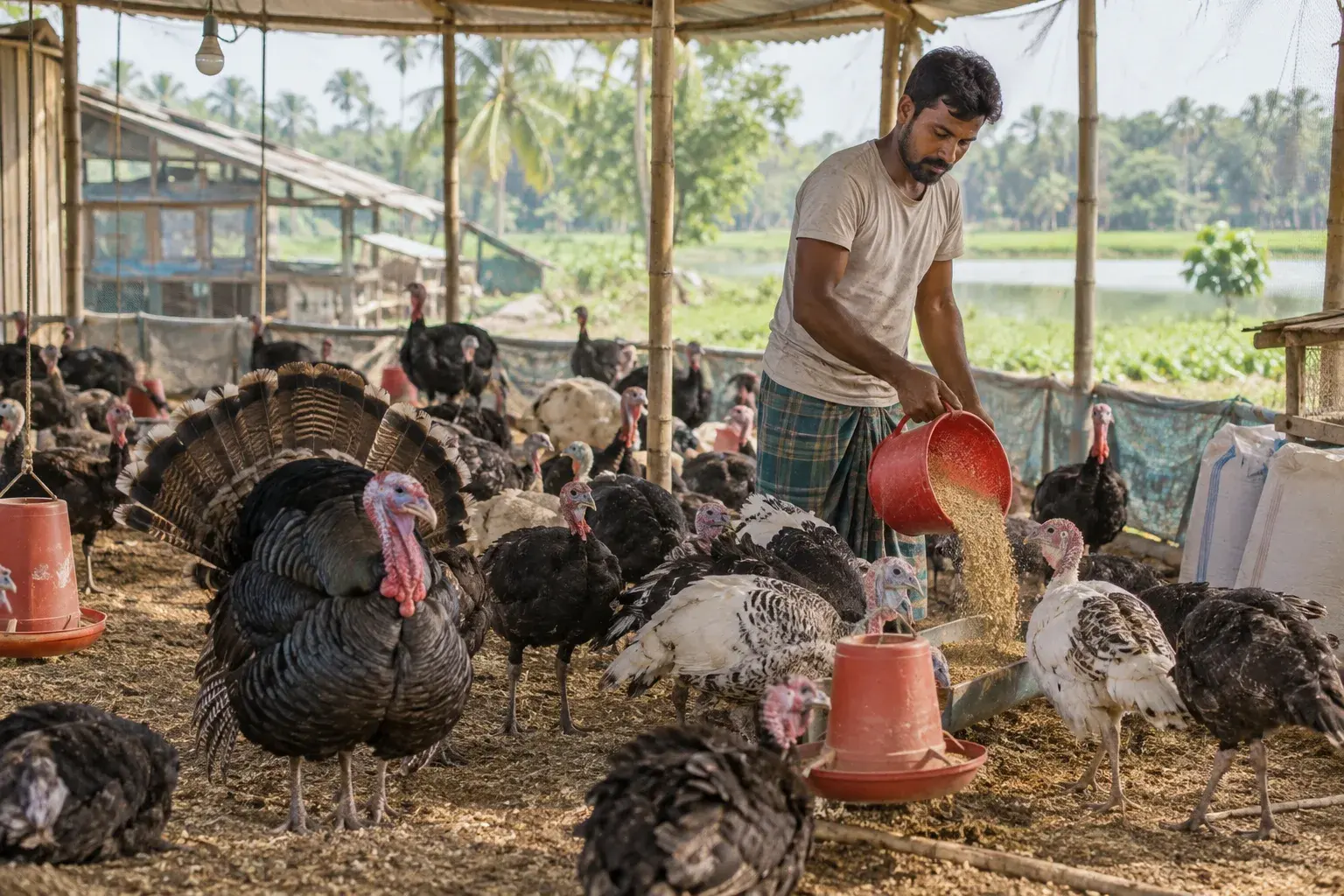 Agriculture & farming
Turkey farming
About 5,000 farms sprang up in the 2015-2020 rush and a few hundred remain. Chick prices fell from Tk 600 to Tk 150 and the livestock department discourages the trade.
- Capital
- ৳1 lakh
- People
- 1 – 3
- First income
- 30 days
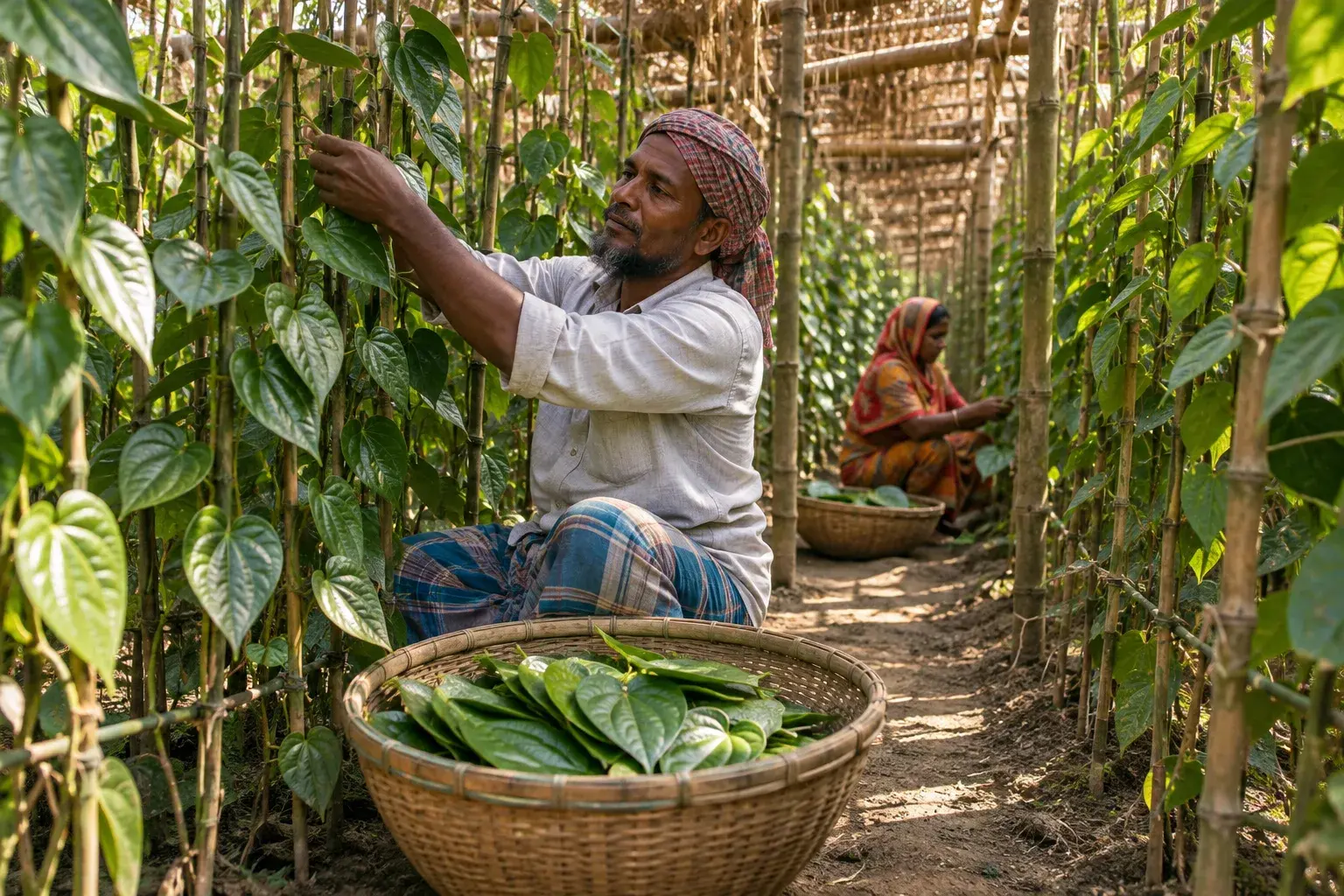 Agriculture & farming
Betel leaf cultivation (boroj)
Growing betel vine inside a bamboo-and-thatch boroj. About Tk 1 lakh a bigha to run, and in Rajshahi a bira of 64 leaves has gone from Tk 100-120 to Tk 4.
- Capital
- ৳1 lakh
- People
- 1 – 4
- First income
- 120 – 180 days
 Agriculture & farming
Agar (agarwood) plantation
Growing agar trees, driving nails into them to force the resin, and selling the wood or the attar. The first money arrives 8 to 16 years after planting, and exporting needs a CITES no-objection certificate from the Forest Department.
- Capital
- ৳1 lakh – ৳10 lakh
- People
- 1 – 6
- First income
- 2,555 – 5,840 days
 Agriculture & farming
Plain-land tea growing
Growing tea on flat land, plucking green leaf and selling it to factories for cash. The fixed rate in March 2026 was Tk 28 a kg with the market at Tk 34-35, but up to 40 percent can be cut off the weight.
- Capital
- ৳1 lakh – ৳5 lakh
- People
- 1 – 6
- First income
- 730 – 1,095 days