
Ghee and butter making
Separating milk into butter and ghee, with chhana or yogurt from the skim. One maund (40 kg) of milk gives 1.25 kg of ghee; cost about Tk 2,900 against Tk 3,040-3,260 of sales - a 5 to 11 percent margin.
- Last reviewed: 19 September 2026
- Version 1

Ghee and butter making
- Starting capital
- ৳60,000 – ৳4,00,000 Editorial estimate
- Manpower
- 2 – 6 people
- First sale
- 15 – 60 days Editorial estimate
- Break-even
- 2 – 6 months Editorial estimate
- Kind of work
- Home-based · Medium difficulty
About the business
Buying raw milk, running it through a separator to take off the cream or butter, boiling that down into ghee, and turning the skim milk left behind into chhana or sour yogurt - three products from one job. At Ghoshpara in Ufulki village, Mirzapur, Tangail, more than a hundred families have done this for generations. Machines run from 11:30 in the morning to five in the afternoon and the village processes 70 to 80 maunds of milk a day on average, dropping to 50 on a slow day. A hand-cranked machine separates about eight maunds an hour and an electric one more. The number that decides everything is the conversion: one maund - 40 kg - of milk yields on average a kilo and a quarter of ghee, plus seven to eight kilos of chhana for the sweet trade. On 19 August 2026 milk there was bought at Tk 60 a kilo, so Tk 2,400 a maund; with wages and fuel the full cost came to about Tk 2,900. The ghee and chhana from that maund sold for Tk 3,040 to Tk 3,260 - a profit of a little over three hundred taka, or five to eleven percent. A single taka on the milk price wipes that out, and that is the real risk of the trade. It is why many at Ghoshpara are shifting from chhana to sour yogurt, which they say pays better. Demand and price for ghee both rise in winter.
Unit economics
| Item | Range | Evidence | Suggest a correction |
|---|---|---|---|
| Monthly working capital | ৳70,000 – ৳2,00,000 | Editorial estimate | |
| Selling price | ৳3,040 – ৳3,260 / unit | Market quote | |
| Variable cost | ৳2,400 – ৳2,900 / unit | Market quote | |
| Gross margin | 4% – 11% | Market quote | |
| Time to first revenue | 15 – 60 days | Editorial estimate | |
| Break-even time | 2 – 6 months | Editorial estimate | |
| Cash cycle | 2 – 15 days | Editorial estimate | |
| Waste / loss | 1% – 4% | Editorial estimate | |
| Daily capacity | 8 – 14 | Market quote |
What you need to start
- A milk separator, hand-cranked or electric. A 100-litre cream separator is listed online at Tk 35,000-40,000. Plus a boiling pan, a stove, strainers and scales.Equipment
- Tins or glass jars and labels for packing. Ghee retails in sizes from 100 grams up to one and a half kilos.Starting stock
- Registration under the Food Safety (Registration and Licensing) Regulations 2026: Tk 1,000 new, Tk 500 renewal, valid three years, compulsory for dairy and packaged food producers.Licence
- Trade licence from the union parishad, municipality or city corporation: form Tk 10, licence book Tk 50, standard tax Tk 30, stamp Tk 150-300, fee Tk 100-60,000 by trade type, issued in 3-5 working days.Licence
- Judging the flame when boiling ghee - too hot and the aroma goes, too cool and it will not grain - and spotting water or adulteration in the milk at the moment of buying.Skill
- Daily raw milk. The Mirzapur craftsmen buy at Tk 60 a kilo from nearby bazars (August 2026), bringing in 8 to 14 maunds a day according to orders.Supplier
- A room at home or a small workshop with water, electricity and space for a stove. At Ghoshpara the work runs from 11:30 in the morning to five in the afternoon.Workspace
How the work is done
- 1Secure the milk supply first. The Ghoshpara craftsmen buy at Mirzapur and nearby bazars - one bought four maunds at Deldurar bazar at Tk 60 a kilo on a Friday.
- 2Buy a separator. A hand-cranked machine does about eight maunds an hour and an electric one more. A 100-litre cream separator is listed at Tk 35,000-40,000.
- 3Take the trade licence from the union parishad or municipality, and get dairy processing named in it.
- 4Register with the Bangladesh Food Safety Authority: Tk 1,000 new, Tk 500 renewal, valid three years, compulsory for dairy producers.
- 5Separate the cream. One maund (40 kg) of milk gives on average 1.25 kg of ghee plus seven to eight kilos of chhana - that ratio is the whole arithmetic of the business.
- 6Boil the cream down into ghee and strain it. Grainy gawa ghee fetches a separate price in the market.
- 7Do not throw away the skim milk - make chhana or sour yogurt from it. The Ghoshpara craftsmen say yogurt pays better than chhana, which is why many are shifting to it.
- 8Deliver chhana to sweet shops and ghee to grocers. Ufulki's output goes to Mirzapur bazar, Tangail, and Keraniganj, Chakbazar, Kachukhet and Narayanganj.
- 9Push sour yogurt through hawkers. More than eighty people buy yogurt wholesale at Ufulki and sell it door to door.
- 10Pack in tins or glass jars with the weight marked, which opens up town shops and online sales; ghee under the Sirajganj and Pabna Ghoshbari names already sells online.
- 11Build ghee stock ahead of winter - people eat more ghee then and the price is a little higher.
Seasons
- JanHigh
- FebNormal
- MarNormal
- AprNormal
- MayNormal
- JunNormal
- JulNormal
- AugNormal
- SepNormal
- OctNormal
- NovHigh
- DecHigh
Where it works well
- Strong fitSirajganj · A major milk-producing region; packed ghee sold under the Sirajganj Ghoshbari name sells nationally online at Tk 1,290 for 900 grams and Tk 2,090 for 1.5 kg.
- Strong fitTangail · At Ghoshpara in Ufulki village, Jamurki union, Mirzapur upazila, more than a hundred families have made ghee, chhana and yogurt for generations, separating 70-80 maunds of milk a day.
- PossibleBogura · Holds the geographical indication for its yogurt and has both long-standing dairy craftsmen and a market, on which ghee and chhana work sits naturally.
- PossibleDhaka · More a selling place than a making place - Ufulki's ghee and chhana go to Keraniganj, Chakbazar and Kachukhet, and pure ghee fetches Tk 1,125-1,750 a kilo in the city.
- PossibleManikganj · Adjoins Tangail and sits inside Dhaka's milk supply belt, so the raw material is at hand and the Dhaka market is an hour away.
- PossibleNarayanganj · A regular destination for the Tangail Ghoshpara output; dense settlement and many sweet shops keep chhana demand steady.
- PossiblePabna · In the same milk belt; gawa ghee branded from Pabna is sold online, so both the raw milk and the ghee trade exist here.
Risks and cautions
- HighWorking capital: The margin is paper-thin - Tk 2,900 of cost against Tk 3,040-3,260 of sales on a maund, a little over three hundred taka. A rise of Tk 8-10 a kilo in milk adds Tk 320-400 to a maund and erases the profit entirely, and the ghee or chhana price cannot follow at once because the sweet shops expect the old rate.
- HighDependency: Without raw milk the work stops the same day, and the milk comes from the open bazar, not under contract. Eight to fourteen maunds a day are brought in as orders demand, but if the bazar is short or another buyer pays more, the machine sits idle. Across Ghoshpara the daily intake falls from eighty maunds to fifty on some days.
- MediumSpoilage: Chhana and sour yogurt last only days and spoil fast in the heat without refrigeration. Ghee keeps better, but the milk still has to be separated the same day; if the work is not finished within hours of the milk arriving, the whole consignment is lost.
- MediumCompliance: Ghee is a notoriously adulterated product, with raids over vegetable fat sold as ghee. Even an honest maker is fined if registration or pack labelling is missing. The 2026 food safety regulations make registration compulsory for dairy producers at Tk 1,000 for three years.
- MediumDemand: Ghee is largely a winter and festival product - people eat more of it in the cold and the price is a little better then, while sales fall off the rest of the year. Chhana demand depends on sweet shops, and they take much less for a large part of the year.
Sources
সিটি কর্পোরেশন থেকে ট্রেড লাইসেন্স প্রাপ্তির ধাপ সমূহ
Collected: 16 Sept 2026Supports: Starting capital · বাংলাদেশ
All food businesses now need safety registration
Collected: 22 Jul 2026Supports: Starting capital · বাংলাদেশ
What changed
No corrections have been published yet.
Questions and answers
No questions yet. Be the first to ask.
Stories about this business
A one-man shop with no signboard, 12-15 kg of peda a day
12 kg of milk with 2.5 kg of sugar yields 4 kg 250 g of peda sold at 500 taka a kg; butter goes at 1,800 and ghee at 2,800, leaving 30,000-35,000 taka a month after costs.
- Reasons
- Good quality, Loyal customers
Similar businesses
 Food processing
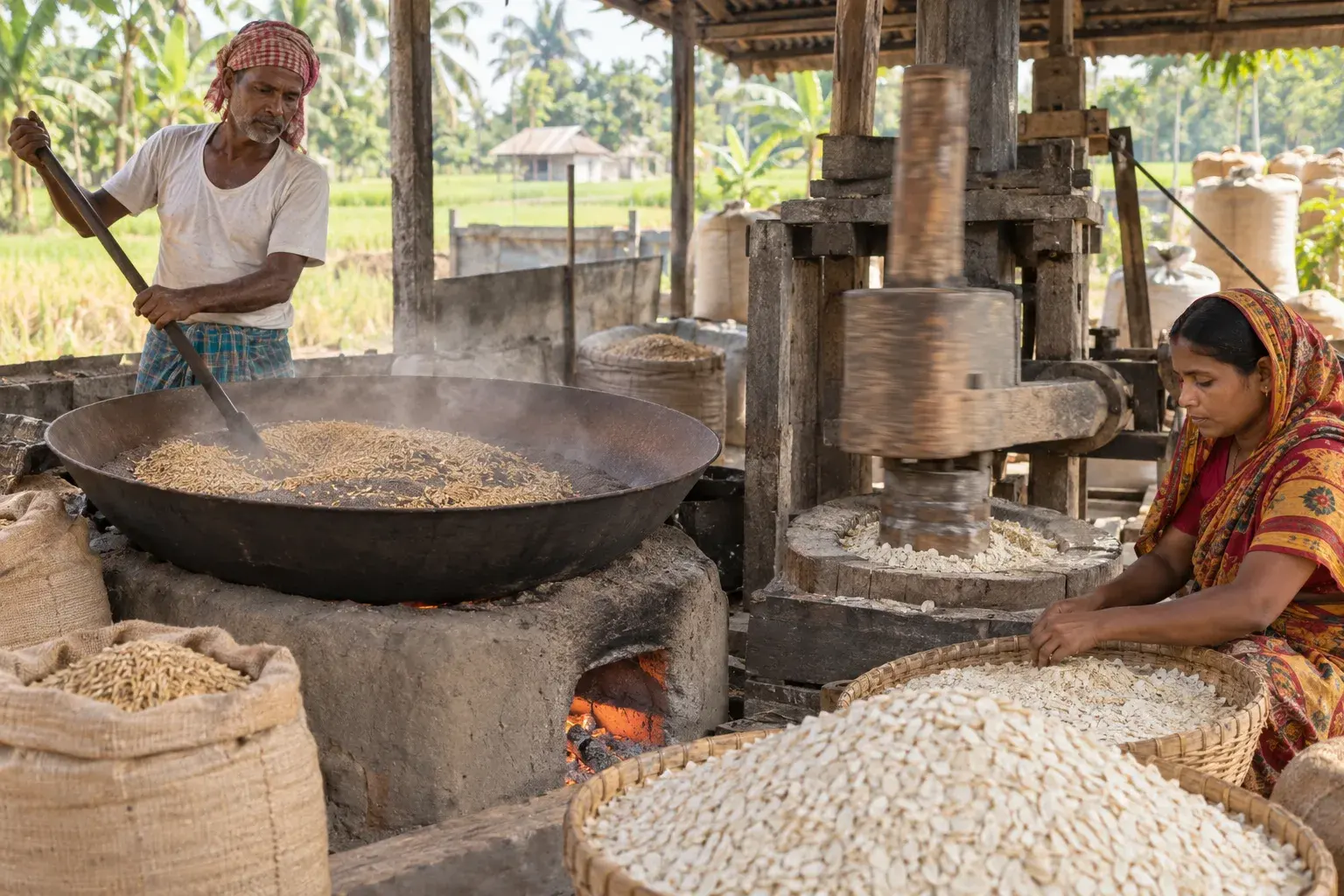
Chira (flattened rice) mill
Roasting paddy in hot sand and flattening it into chira. A village mill charges about Tk 8 a kg to flatten a farmer's own paddy, while chira retails at Tk 70-80 a kg.
- Capital
- ৳60k – ৳5 lakh
- People
- 2 – 5
- First income
- 30 – 90 days
 Food processing
Tulshimala aromatic rice
Growing and milling Sherpur's GI-registered aromatic paddy. Paddy is Tk 2,200-2,400 a maund and the rice sells online at Tk 145-150 a kilo - no higher than aromatic rice without a GI.
- Capital
- ৳50k – ৳3 lakh
- People
- 1 – 6
- First income
- 120 – 180 days
 Food processing
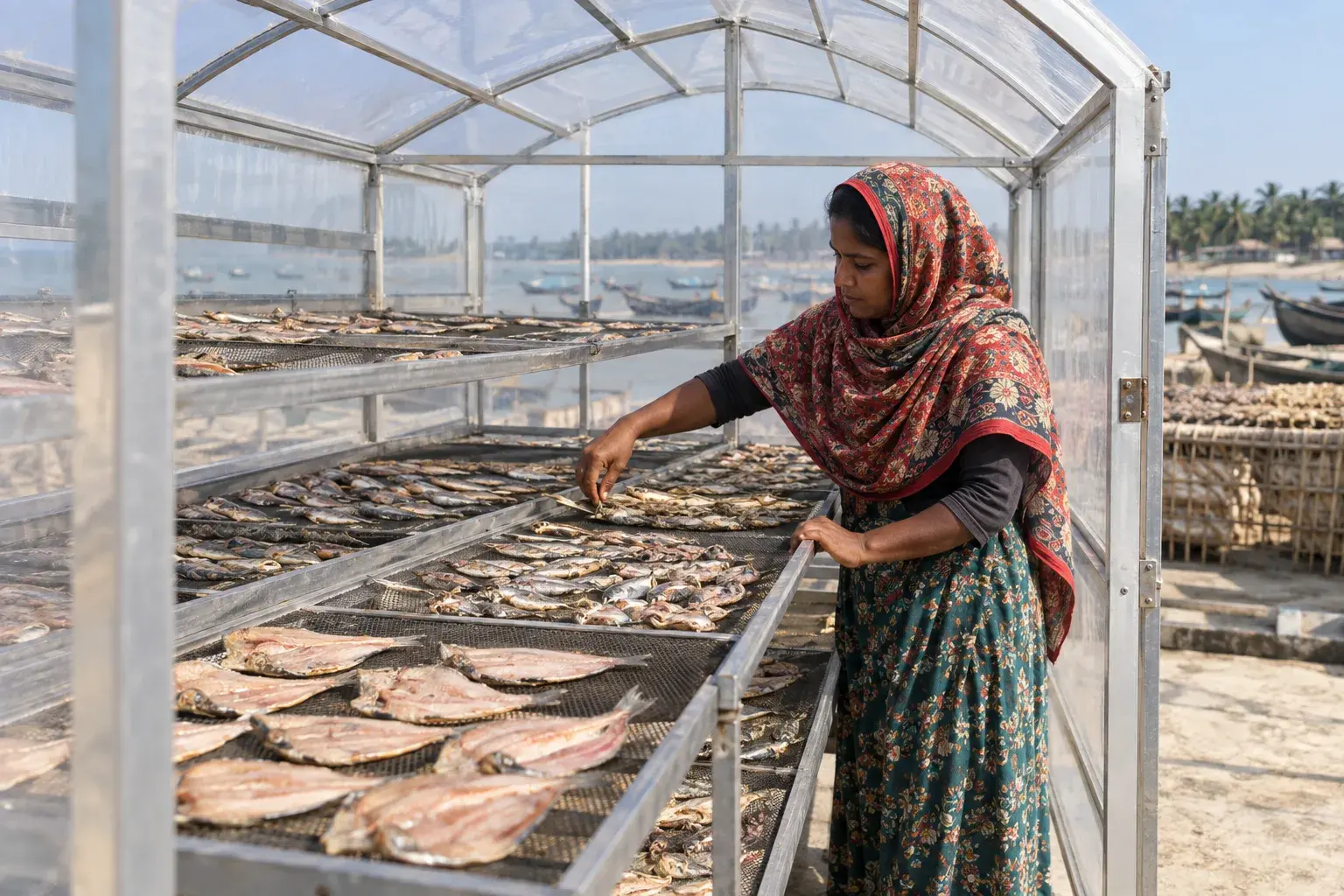
Solar and rack-dried shutki
Drying fish on raised racks or inside a solar dryer instead of on the ground, so no insecticide is needed. At Asadganj on 3 June 2026 good churi shutki fetched Tk 2,000-2,500 and loitta Tk 600-1,500 a kg.
- Capital
- ৳50k – ৳6 lakh
- People
- 2 – 20
- First income
- 20 – 60 days
 Food processing
Paneer and chhana making
Milk split into chhana, pressed into paneer. 8-10 kg of milk makes 1 kg of paneer, which sells at Tk 900-1,200 a kg - the whole business is the gap between the two prices.
- Capital
- ৳50k – ৳20 lakh
- People
- 1 – 10
- First income
- 7 – 135 days