
Home kitchen selling online
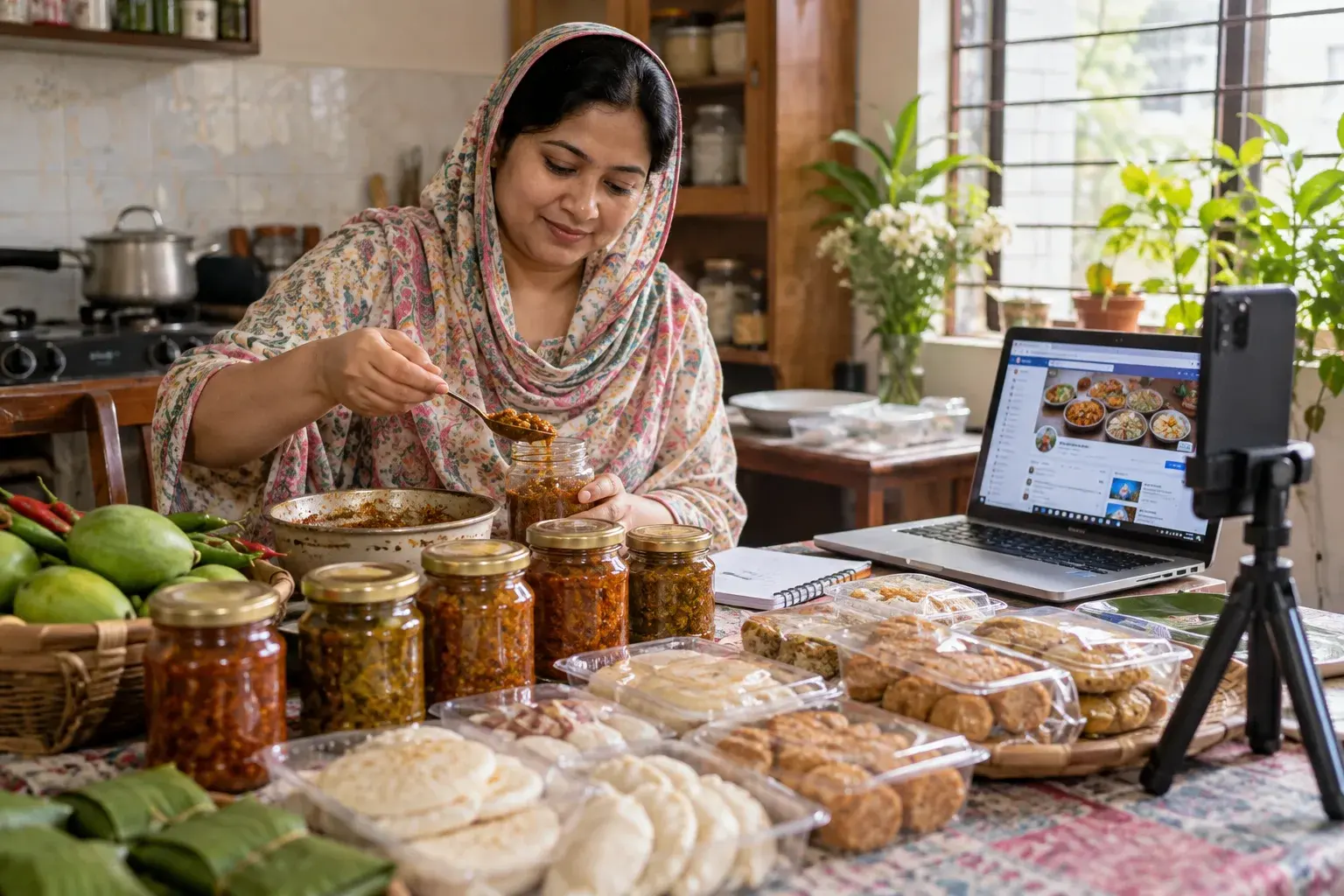
Cooking pickles, pitha and meals at home and selling them through a Facebook page. A jar of pickle sells for Tk 150-465, and the 2026 food safety rules now require packaged-food registration at Tk 1,000 for three years.
- Last reviewed: 19 September 2026
- Version 1
Home kitchen selling online
- Starting capital
- ৳5,000 – ৳60,000 Editorial estimate
- Manpower
- 1 – 3 people
- First sale
- 7 – 30 days Editorial estimate
- Break-even
- 1 – 3 months Editorial estimate
- Kind of work
- Home-based · Easy
About the business
Cooking in your own kitchen and selling through a Facebook page or WhatsApp. No shop, no signboard, no staff, which is why it can be started on very little money. Pickles, pitha, naru, morobba, kumrar bori, frozen paratha and samosa, and biryani cooked to order are what move. Nafiza Hasan of Azimpur in Dhaka opened a page called 'Bhoj' in August 2020 and sold her own cooking through it; within two years her monthly income passed a lakh. She cooks, photographs and markets everything herself because she could not afford to pay anyone else. On prices: named sellers on Daraz Bangladesh list homemade pickle at Tk 180 for 300g of tamarind pickle, Tk 220 for 500g and Tk 463 for a 450g jar of local garlic pickle (16 September 2026) - roughly Tk 150 to Tk 465 a jar. The thing nobody tells a home cook is the new rule. The Food Safety (Registration and Licensing) Regulations 2026, gazetted 16 July 2026, bring every producer of packaged food inside registration: Tk 1,000 new, Tk 500 renewal, valid three years. Put your pickle or pitha in a labelled jar and sell it and you need that registration, plus a trade licence and a TIN. Catering services carry 15 percent VAT. The country moves 350,000-400,000 parcels a day, so the market is not small. But food spoils, cash-on-delivery money comes back slowly, and when a page's reach falls the orders fall with it.
Unit economics
| Item | Range | Evidence | Suggest a correction |
|---|---|---|---|
| Monthly working capital | ৳5,000 – ৳30,000 | Editorial estimate | |
| Selling price | ৳150 – ৳465 / unit | Market quote | |
| Variable cost | ৳70 – ৳200 / unit | Editorial estimate | |
| Gross margin | 53.3% – 57% | Editorial estimate | |
| Time to first revenue | 7 – 30 days | Editorial estimate | |
| Break-even time | 1 – 3 months | Editorial estimate | |
| Cash cycle | 3 – 15 days | Editorial estimate | |
| Waste / loss | 5% – 12% | Editorial estimate | |
| Daily capacity | 10 – 60 | Editorial estimate |
What you need to start
- Gas burner and cylinder (12 kg at Tk 1,585, BERC-regulated, effective 2 September 2026), large pans, a fridge or deep freezer, a weighing scale, glass jars and packets, and a sealer.Equipment
- Bangladesh Food Safety Authority registration under the Food Safety (Registration and Licensing) Regulations 2026, gazetted 16 July 2026: Tk 1,000 new, Tk 500 renewal, valid three years. Packaged food producers, catering and sweetmeat makers are all covered.Licence
- TIN from the National Board of Revenue, with VAT registration as sales grow. Catering services carry 15 percent VAT.Licence
- Trade licence from the city corporation or municipality: form Tk 10, licence book Tk 50, standard tax Tk 30, stamp Tk 150-300, licence fee Tk 100-60,000 by trade type. Issued in 3-5 working days and renewed yearly.Licence
- Keeping the taste identical every time, plus photographing food on a phone and running the page. Nafiza Hasan took a digital marketing course and ran her own page.Skill
- A regular source for spices, oil and rice from the kitchen market or a wholesaler, a wholesale market such as Chawkbazar for jars and packets, and a courier or delivery rider.Supplier
- Your own kitchen is the factory, but selling needs its own burner, its own pots and a separate shelf for dry stock. The kitchen can be physically inspected at registration.Workspace
How the work is done
- 1Decide what you will make: pickles, pitha, or cooked meals. Pickles and pitha keep for days; cooked food does not keep a day. That one choice changes the whole risk of the business.
- 2Set the kitchen up separately. Mixing the selling cooking with the household cooking spoils both the quantity and the consistency.
- 3Take the trade licence from the city corporation or municipality: form Tk 10, book Tk 50, standard tax Tk 30, stamp Tk 150-300, and the licence fee by trade type. It is issued in 3-5 working days.
- 4If you make packaged food, take the Bangladesh Food Safety Authority registration: Tk 1,000 new, Tk 500 renewal, valid three years. Once you sell in a labelled jar you cannot avoid it.
- 5Get a TIN from the NBR. As sales grow VAT registration follows too; catering services are taxed at 15 percent.
- 6Open a Facebook page, photograph your own food, and put the price on the post. Hiding the price and asking people to message loses half of them.
- 7Sell the first batch to people you know and put their comments on the page. The first thirty customers are what bring the next three hundred.
- 8Fix the jar, the label and the dates: when it was made and how long it keeps. Without that you have no answer when a complaint comes.
- 9Fix a courier or delivery rider and get in writing how many days cash-on-delivery money takes to come back.
- 10Write down ingredient costs and sales every month. Oil and spice prices rise by double digits in a year while the jar price is hard to raise, and without the book you never see where the profit went.
- 11Buy ingredients ahead for Ramadan, Eid and the winter pitha season. A large part of the year's sales happens in those three windows.
Seasons
- JanHigh
- FebHigh
- MarHigh
- AprNormal
- MayNormal
- JunNormal
- JulNormal
- AugNormal
- SepNormal
- OctNormal
- NovNormal
- DecHigh
Where it works well
- Strong fitChattogram · A large city with many expatriate families and its own dish identities such as mezbani and kala bhuna that carry their own demand.
- Strong fitDhaka · Dense, high purchasing power, and the best courier and delivery network. There is a documented case of a Facebook page run from Azimpur in Dhaka earning over a lakh a month.
- Strong fitGazipur · A dense population of factory and salaried workers, and it sits on Dhaka's courier lines.
- Strong fitNarayanganj · Attached to Dhaka, so same-day delivery to Dhaka buyers is possible, which is the whole point for cooked food.
- PossibleBogura · The commercial centre of the north, with a reputation in dairy products built on its yoghurt.
- PossibleCumilla · On the Dhaka-Chattogram highway so courier is easy, and the rasmalai name helps with sweet products.
- PossibleKhulna · A divisional city with its own demand for prawn and coconut pickles.
- PossibleRajshahi · In the mango season orders for amsotto, mango pickle and morobba come from all over the country.
- PossibleSylhet · Remittance families have money to spend, and orders for pickles and dry foods go abroad as well.
Risks and cautions
- HighCompliance: The Food Safety (Registration and Licensing) Regulations 2026 were gazetted on 16 July 2026 and bring packaged-food producers inside registration: Tk 1,000 new, Tk 500 renewal, three years. Almost nobody making pickles or pitha at home and selling them in labelled jars online knows this. Selling without it risks a fine, and enforcement drives under the food safety law are running weekly.
- HighSpoilage: Cooked food is a one-day product. A cancelled order or a customer who stops answering the phone means the whole cooking is a loss, and in hot weather a power cut spoils what is in the fridge too. This is why most people who survive drift towards pickles, naru and morobba, which keep.
- HighDependency: The whole business stands on one Facebook page. If reach falls, the page is hacked, or it is reported and taken down, every order stops in a day. In May 2026 a ring was caught hacking 30,000 Facebook accounts and selling them online. If customer phone numbers are not kept in a separate book, losing the page means losing the customers.
- MediumWorking capital: Under cash on delivery the goods go first and the money comes later. Courier settlement takes days, and by then the next batch of ingredients has to be bought. When a large order ties up the cash, household money goes into the business, and that is where most home ventures collapse.
- MediumDemand: Sales jump in Ramadan, Eid and the winter pitha season and fall in the other months. The peak has to carry the whole year, but many treat the peak as normal and expand on it.
Sources
সিটি কর্পোরেশন থেকে ট্রেড লাইসেন্স প্রাপ্তির ধাপ সমূহ
Collected: 16 Sept 2026Supports: Starting capital · বাংলাদেশ
- Collected: 15 Sept 2026
Supports: Monthly working capital · ঢাকা মহানগর — সিপাহীবাগ, মিরপুর-৬, মোহাম্মদপুর টাউন হল, নিউমার্কেট, রামপুরা, মহাখালী বাজার
- Collected: 15 Sept 2026
Supports: Monthly working capital · ঢাকা মহানগর
LPG price cut by Tk 13, 12kg cylinder now Tk 1,585 (BERC, কার্যকর ২ সেপ্টেম্বর ২০২৬)
Collected: 2 Sept 2026Supports: Starting capital · বাংলাদেশ
All food businesses now need safety registration
Collected: 22 Jul 2026Supports: Starting capital · বাংলাদেশ
What changed
No corrections have been published yet.
Questions and answers
No questions yet. Be the first to ask.
Stories about this business
Started on 9,000 taka, now earning 50,000-60,000 a month
A home kitchen started online in 2023 with 9,000 taka returned 15,000 taka of profit on the first round. A one-pound vanilla cake costs 250-300 taka to make and sells at 550, and the business now earns 50,000-60,000 taka a month.
- Capital
- ৳9k
- Reasons
- Working capital, Careful bookkeeping
Similar businesses
 Food processing
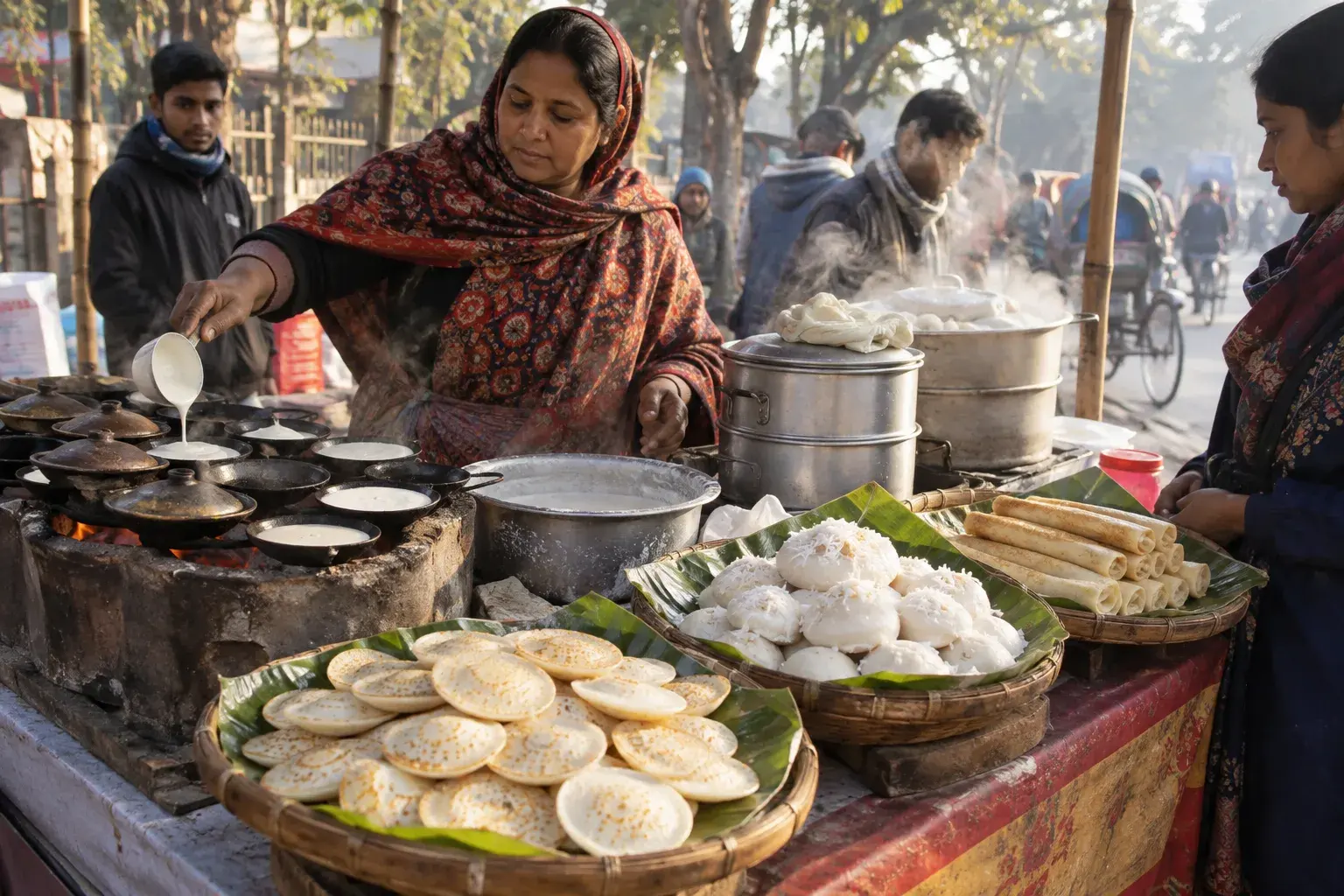
Pitha shop
A winter footpath stall selling vapa, chitoi and patishapta. Chitoi Tk 5-10, vapa Tk 10-20; a stall sells 250-800 pitha a day, but the trade only runs three or four months a year.
- Capital
- ৳5k – ৳60k
- People
- 1 – 4
- First income
- 3 – 60 days
 Food processing
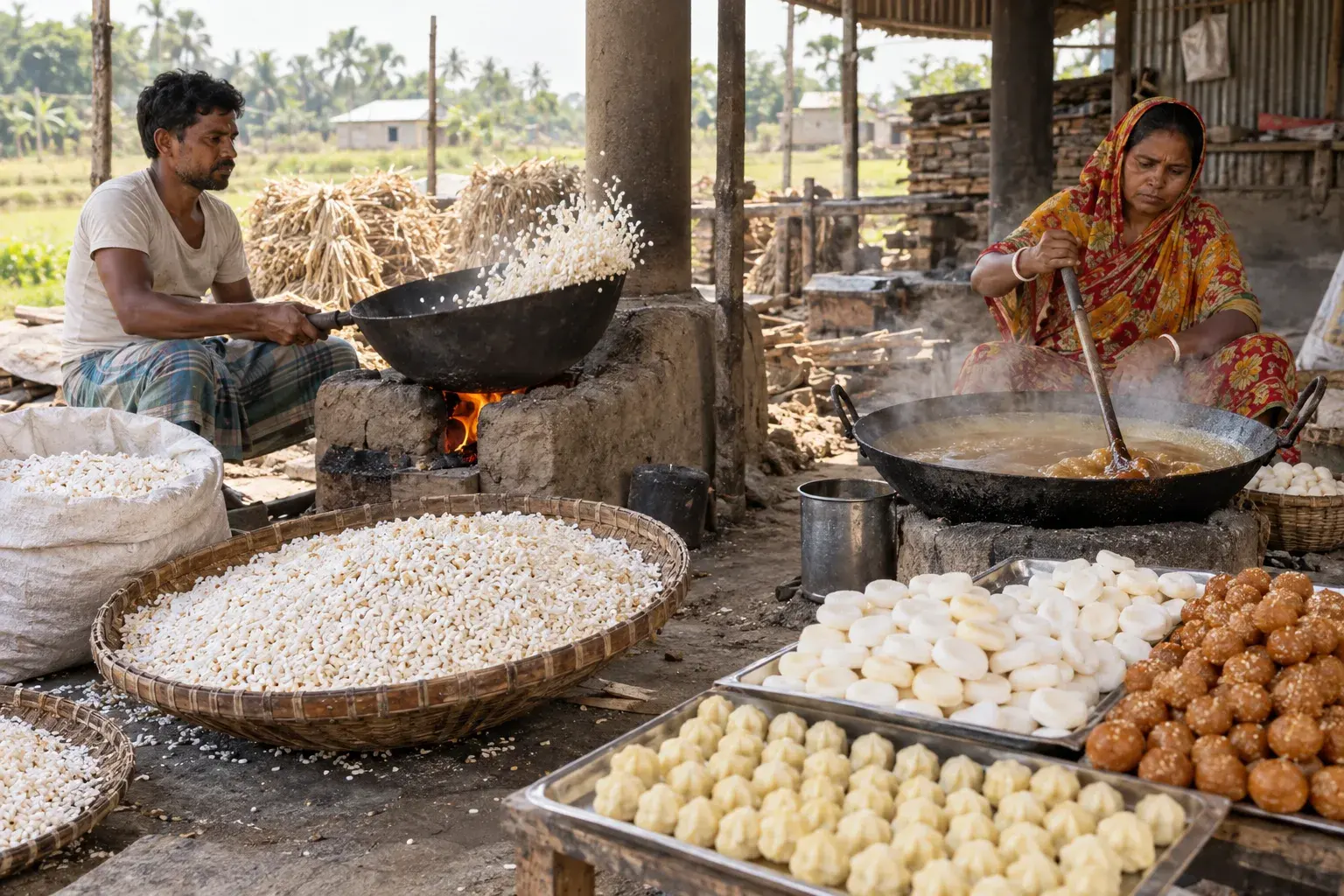
Khoi and batasa making
Popping paddy into khoi and boiling sugar or gur into batasa and kadma. Wholesale sugar is Tk 102-103 a kg and batasa sells at Tk 190-300. Very low capital and no BSTI CM licence.
- Capital
- ৳15k – ৳1.5 lakh
- People
- 2 – 6
- First income
- 10 – 40 days
 Food processing
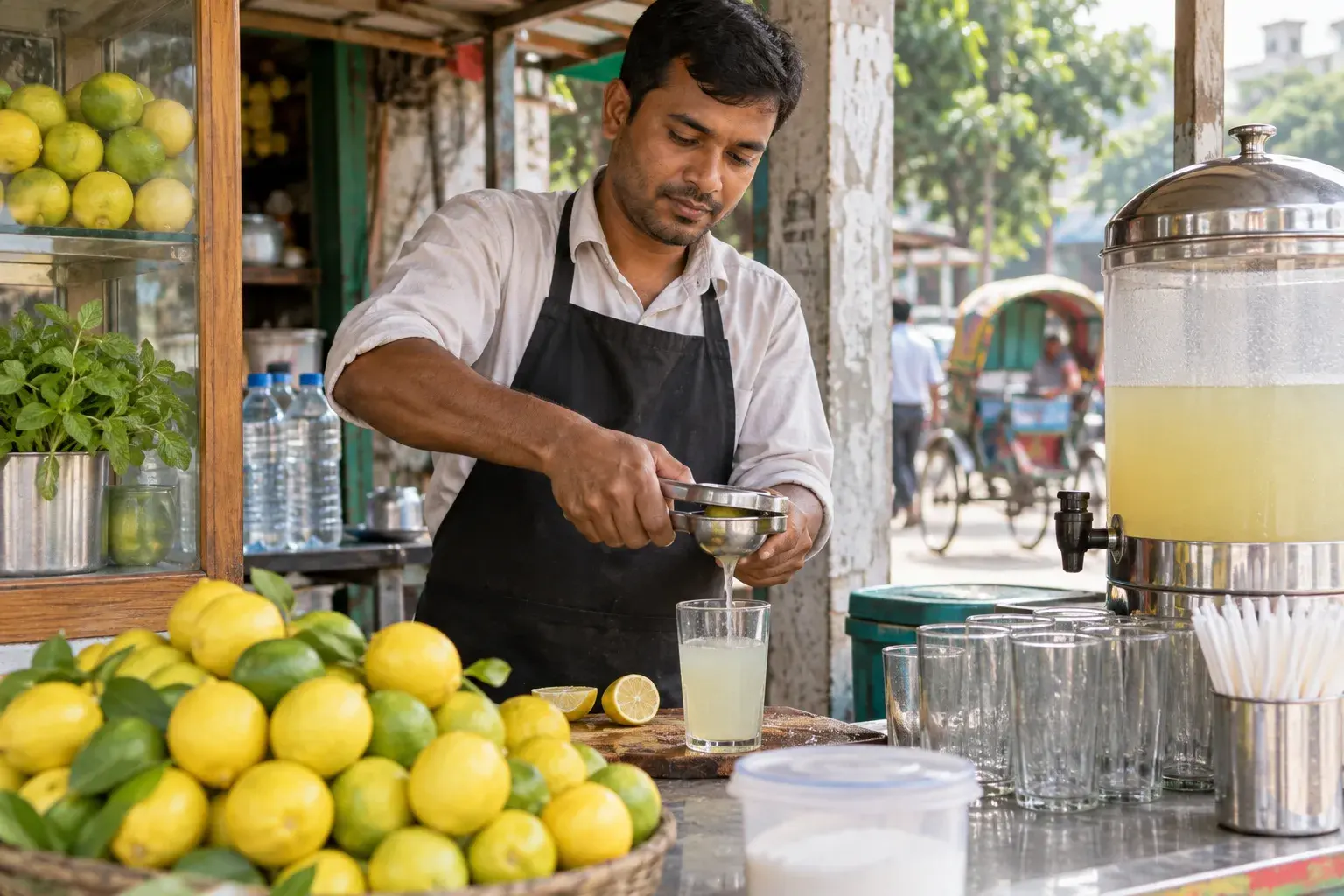
Juice and sharbat shop
Lemon, sugarcane and bael sharbat through the hot months at Tk 10-25 a glass, lassi at Tk 50. The trade stands on three things: ice, electricity and one hot season.
- Capital
- ৳15k – ৳3 lakh
- People
- 1 – 4
- First income
- 5 – 45 days
 Food processing
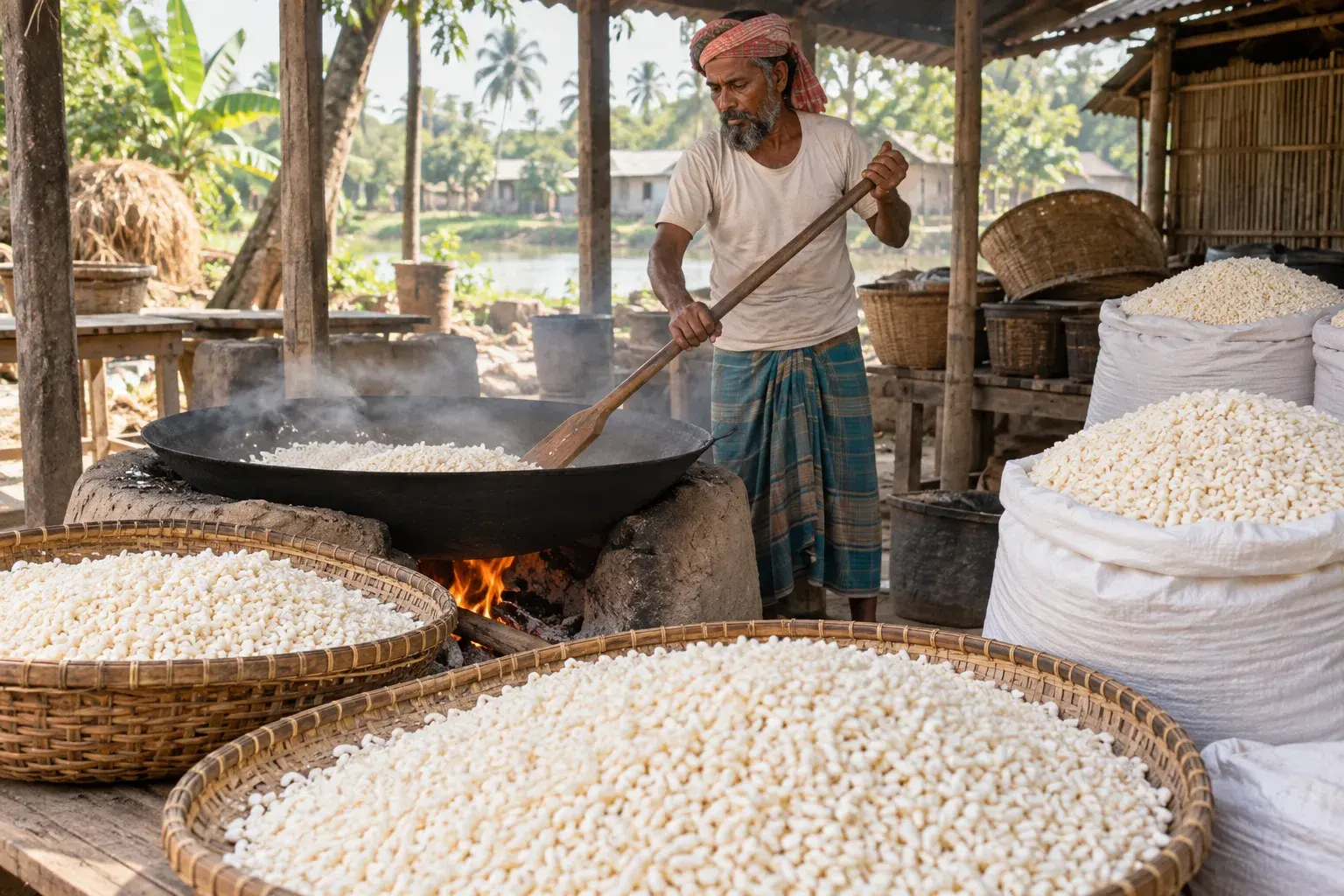
Puffed rice (muri) making
Frying rice into muri. One kilo of rice gives 900 grams of muri and coarse rice costs Tk 50-55/kg, so machine muri keeps only Tk 4-6 a kilo while hand-fried pure muri wholesales at Tk 90.
- Capital
- ৳20k – ৳2 lakh
- People
- 2 – 8
- First income
- 7 – 30 days