
Mushroom cultivation
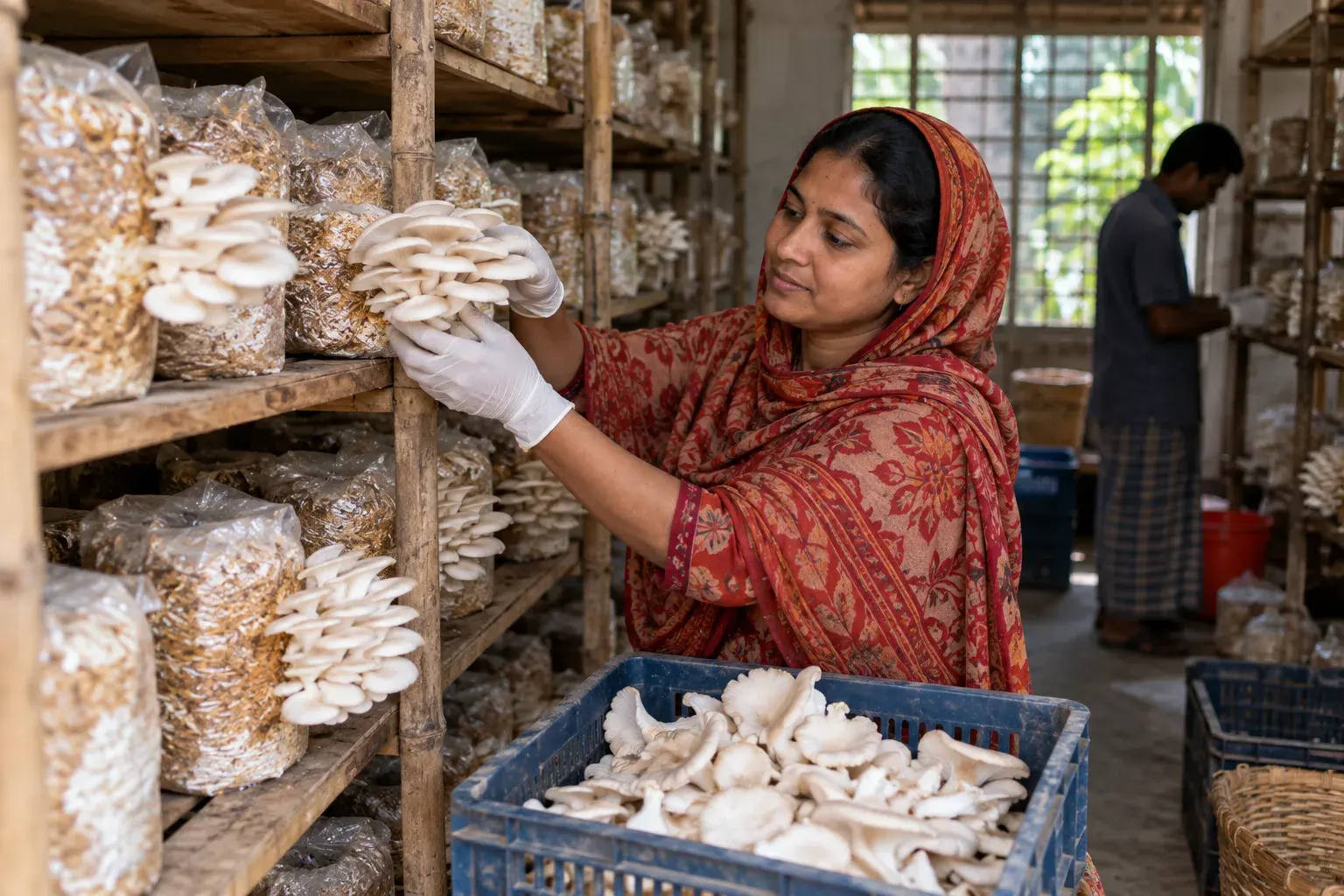
Spawn packets on indoor racks yield in 25-30 days. Cost is Tk 80-90 a kilo against Tk 250-300 selling, but outside Dhaka finding the buyer is the real work.
- Last reviewed: 19 September 2026
- Version 1
Mushroom cultivation
- Starting capital
- ৳25,000 – ৳5,00,000 Editorial estimate
- Manpower
- 1 – 3 people
- First sale
- 25 – 45 days Practitioner verified
- Break-even
- 3 – 11 months Editorial estimate
- Kind of work
- Farm · Medium difficulty
About the business
Spawn packets filled with straw or sawdust are stacked on racks, sprayed twice a day, and in 25 to 30 days the mushrooms push out through the plastic. It takes almost no land — one grower in Noakhali put 4,500 packets into a semi-permanent shed on one and a half decimals. The arithmetic looks good too. Md Hasib, a grower in Bandar, Narayanganj, says a kilo of fresh mushroom costs Tk 80-90 to produce and sells at Tk 250-300, that a one-kilo spawn packet yields roughly a kilo of mushrooms, and that dried mushroom fetches Tk 1,000-1,500 a kilo. The government is behind it as well: the Mushroom Development Institute at Savar teaches cultivation, spawn production, mother culture and marketing. But the honest point is that outside Dhaka the market is very thin. In April 2026 a Noakhali grower said plainly that people in that region are still not used to eating mushrooms, so no market has formed. Mushrooms last two or three days and cannot be held without cold storage. So the question is not how much will grow — it is who will buy. City supermarkets, restaurants and a steady set of online customers: if none of the three is already in hand, it is better to stop before the packets go on the rack.
Unit economics
| Item | Range | Evidence | Suggest a correction |
|---|---|---|---|
| Monthly working capital | ৳20,000 – ৳1,80,000 | Editorial estimate | |
| Selling price | ৳250 – ৳300 / kg | Practitioner verified | |
| Variable cost | ৳80 – ৳90 / kg | Practitioner verified | |
| Gross margin | 64% – 73% | Editorial estimate | |
| Time to first revenue | 25 – 45 days | Practitioner verified | |
| Break-even time | 3 – 11 months | Editorial estimate | |
| Cash cycle | 30 – 60 days | Editorial estimate | |
| Waste / loss | 10% – 25% | Editorial estimate | |
| Daily capacity | 2 – 10 | Practitioner verified |
What you need to start
- Bamboo or steel racks, a sprayer, a thermometer and hygrometer, blades, and a dryer or drying mats. A fridge buys an extra day or two on fresh mushroom.Equipment
- Straw or sawdust, polythene bags, cotton plugs and rubber bands — the raw materials if you make your own spawn packets.Starting stock
- Trade licence from the city corporation, municipality or union parishad: form Tk 10, licence book Tk 50, standard tax Tk 30, stamp Tk 150-300, licence fee Tk 100-60,000 by trade type, issued in 3-5 working days. Supplying a supermarket or an institution requires one.Licence
- Drying, powdering and packing mushrooms for sale brings it under Bangladesh Food Safety Authority registration: Tk 1,000 new, Tk 500 renewal, valid three years. Selling fresh mushroom alone does not.Licence
- Starting without training means mould and ruined packets. The Mushroom Development Institute in Savar runs an informal orientation and demonstration session on every working day.Skill
- Spawn and mother culture. The Mushroom Development Institute at Savar helps growers obtain pure culture, master mother culture and commercial spawn; a private lab's packet runs about Tk 40.Supplier
- A shaded, humid, ventilated room. A semi-permanent shed on one and a half decimals holds 4,500 packets, so land is barely a constraint.Workspace
How the work is done
- 1Find the buyer before you set a single packet. A city supermarket, a restaurant or a regular customer list — without at least one of them, do not start.
- 2Take training at the Mushroom Development Institute in Savar or at the district agriculture extension office. Cultivation, spawn production and marketing are all taught there.
- 3Prepare the room: shaded, damp, with air movement. A semi-permanent shed on one and a half decimals holds 4,500 packets.
- 4Build bamboo or steel racks so the packets sit in layers. Packets left on the floor waste space and attract pests.
- 5Start with 300-500 packets. Only expand after seeing both how much came out and how much actually sold.
- 6Spray twice a day and watch the temperature and humidity. When it gets hot the yield drops, and that is exactly what happens in summer.
- 7Pull out any packet showing green or black mould at once. One contaminated packet can take the whole rack with it.
- 8Harvest at dawn and deliver the same day. Fresh mushroom lasts two or three days, and less than that without a fridge.
- 9Dry whatever does not sell. Dried mushroom goes at Tk 1,000-1,500 a kilo and keeps for months — it is the only way to save unsold stock.
- 10Open your own Facebook page and build a repeat customer list. For many growers this is where most sales come from, because there is no wholesale market for mushrooms.
- 11Learn to make your own spawn. At Tk 32 a packet there is no need to buy at Tk 40, and surplus packets can be sold to other growers.
Seasons
- JanHigh
- FebHigh
- MarNormal
- AprLow
- MayLow
- JunLow
- JulLow
- AugLow
- SepNormal
- OctNormal
- NovHigh
- DecHigh
Where it works well
- Strong fitDhaka · The government Mushroom Development Institute is at Savar, and between the supermarkets, restaurants and hotels the city holds almost the whole national market.
- Strong fitGazipur · The Dhaka market is an hour away, and shaded space with cheap rent is easy to find.
- Strong fitNarayanganj · Growers in Bandar upazila harvest 8-10 kg a day and send it to Dhaka; the short supply line keeps spoilage down.
- PossibleChattogram · Supermarkets, Chinese restaurants and hotels give it the largest buyer base after Dhaka.
- PossibleCox's Bazar · Hotel and restaurant demand rises in the tourist season, but when the season ends so do the sales.
- PossibleManikganj · Right beside Savar and Dhaka, so training and spawn are easy to get.
- PossibleMymensingh · Training is easy around the agricultural university and the extension offices, but the selling market is small.
- PossibleSylhet · City hotels and restaurants plus remittance households give a small but steady market.
- Weak fitNoakhali · The agriculture department has trained entrepreneurs, but no market has formed — a local grower says plainly that people here are not used to eating mushrooms.
- Weak fitRangpur · The climate suits the crop, but local buying habits are thin and it is a long way to send fresh mushroom to Dhaka.
Risks and cautions
- MediumDependency: The whole yield depends on good spawn, and good spawn is not available in every district. Buy bad spawn and you find out 25-30 days later that nothing is coming — by which time a whole cycle's money and time are gone.
- MediumWorking capital: Spawn packets are spent within one cycle, so they have to be bought again every month. If sales money is slow, the next batch of packets cannot be bought, and once the shed is empty it takes another month to get back into production.
- HighDemand: This is the biggest danger in the business and the least talked about. Outside Dhaka the market has not formed. In April 2026 a Noakhali grower said outright that people there are not used to eating mushrooms, so no market exists — and he has about Tk 5 lakh invested. The crop will grow; without a buyer the crop is the problem.
- HighSpoilage: Fresh mushroom does not keep beyond two or three days, less without refrigeration. Whatever does not sell on the day it is picked has to be dried, and drying costs most of the weight. Looking for a buyer after harvesting guarantees a loss.
- HighOther: Green or black mould in the packets. One infected packet spreads to its neighbours and takes the whole rack's yield with it. It recurs whenever the room gets too warm or the air does not move, and the full cost of every packet is lost.
Sources
সিটি কর্পোরেশন থেকে ট্রেড লাইসেন্স প্রাপ্তির ধাপ সমূহ
Collected: 16 Sept 2026Supports: Starting capital · বাংলাদেশ
- Collected: 7 Sept 2026
Supports: Starting capital · সাভার, ঢাকা
What changed
No corrections have been published yet.
Questions and answers
No questions yet. Be the first to ask.
Stories about this business
10,000 taka and 50 spawn packets, now 25,000-30,000 a month
She started at home in 2023 with 10,000 taka and 50 spawn packets; 400 packets now give 5-6 kg a day, 40,000-45,000 taka of monthly sales and 25,000-30,000 taka of net income.
- Capital
- ৳10k
- Ran for
- 1 months
- Reasons
- Working capital, Spoilage
Similar businesses
 Agriculture & farming
Jute farming
Sown in March-April, cut and retted in July-August. National average wholesale in August 2026 was Tk 98.75 a kg for white jute (Tk 3,950 a maund) and Tk 91.84 for tossa (Tk 3,673), against a production cost of Tk 2,600-3,200 a maund.
- Capital
- ৳24k – ৳1.5 lakh
- People
- 2 – 8
- First income
- 120 – 150 days
 Agriculture & farming
Floating bed vegetable and seedling farming
Building beds of water hyacinth and algae on open water to raise vegetable seedlings. No land and no irrigation needed. In Nazirpur a bed costs Tk 11,000 to build against an expected Tk 20,000 of seedling sales.
- Capital
- ৳22k – ৳2.2 lakh
- People
- 2 – 6
- First income
- 35 – 60 days
 Agriculture & farming
Biogas plant
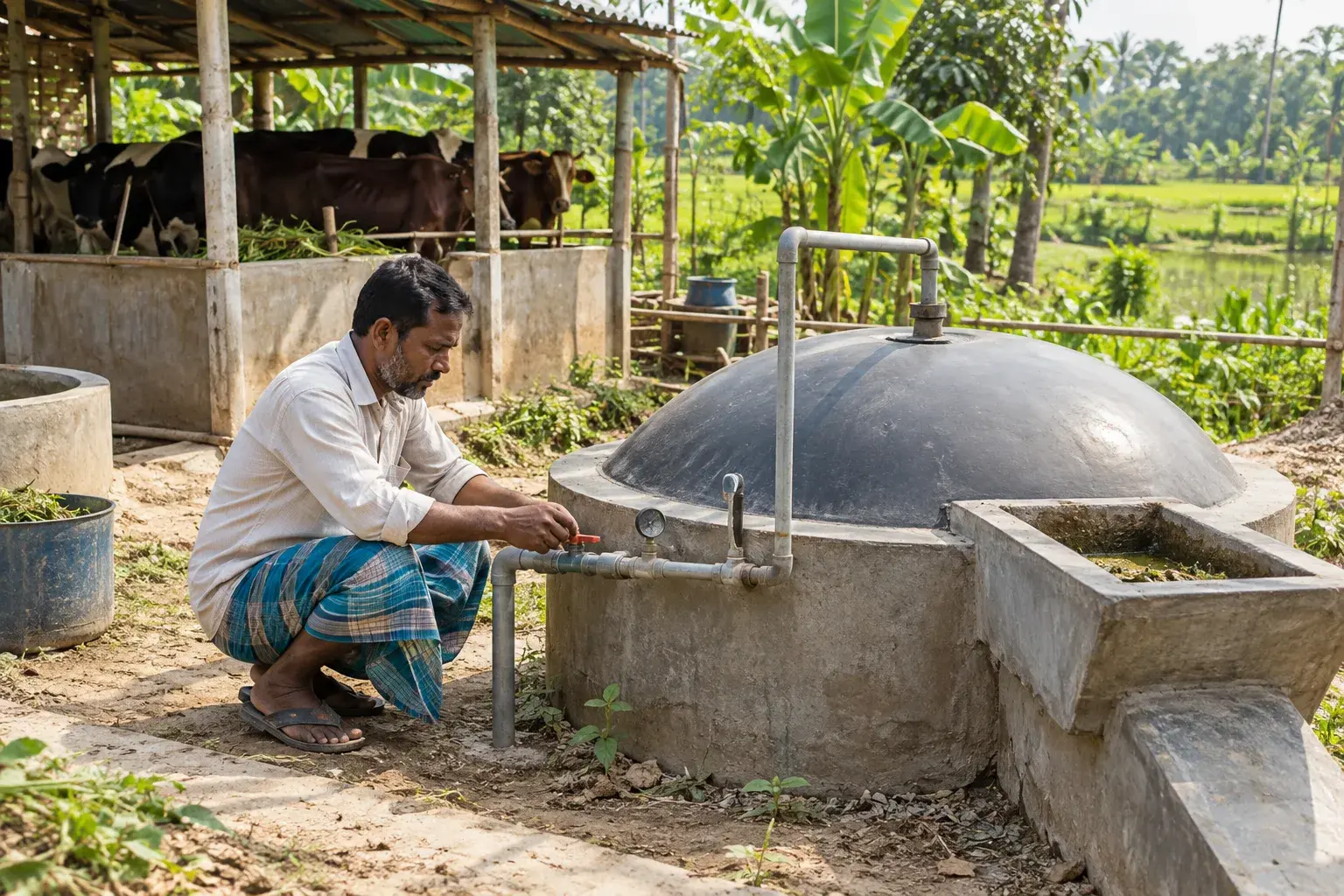
Cooking gas and organic fertiliser out of cow dung. This is not an income business but a cost-saving one: the plant costs Tk 28,000-50,000 and saves about Tk 4,000 a month in fuel plus Tk 2,000-2,500 from selling the surplus fertiliser.
- Capital
- ৳28k – ৳50k
- People
- 1 – 2
- First income
- 15 – 90 days
 Agriculture & farming
Sheep rearing
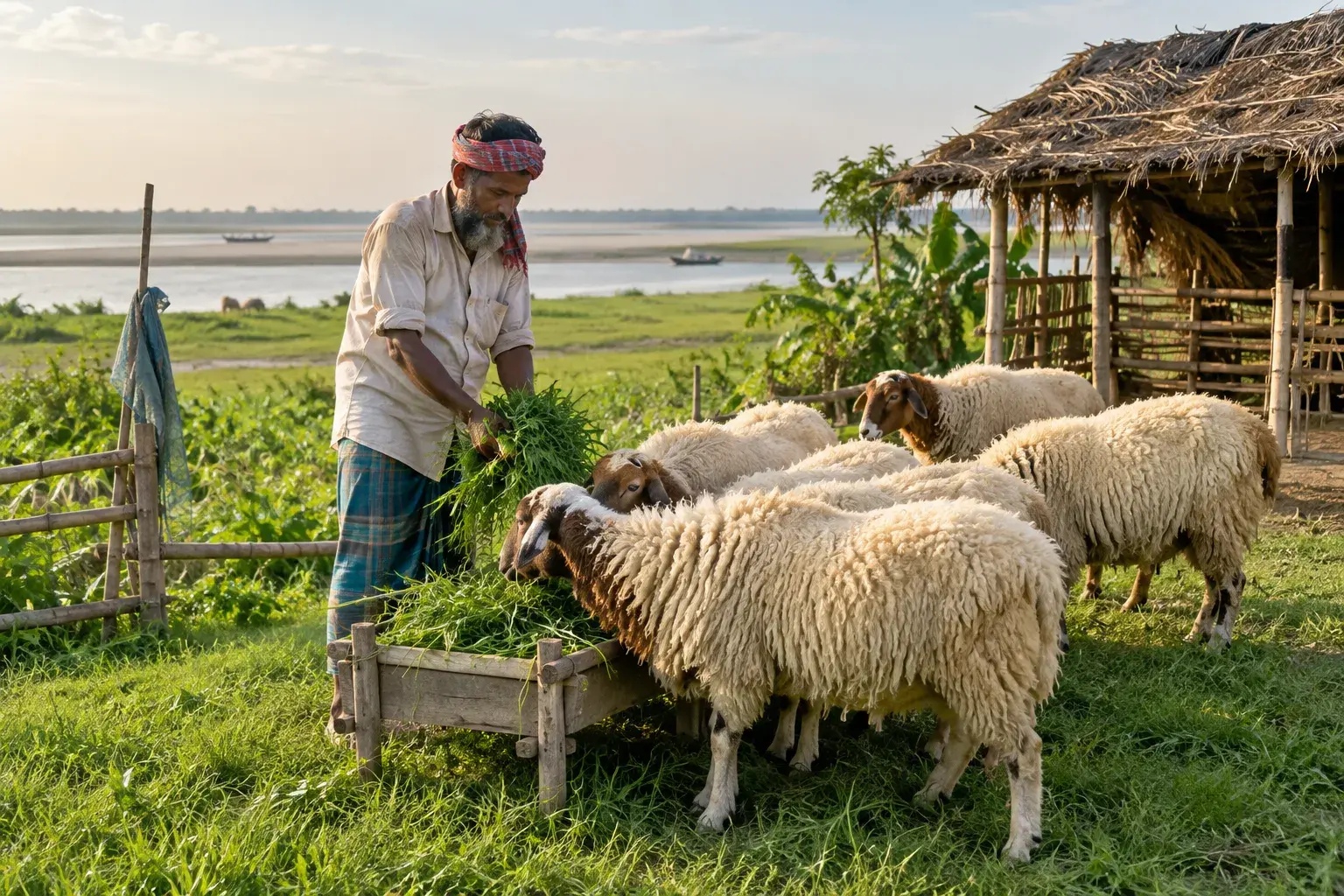
Rearing sheep on open grazing in fields and chars. Before Qurbani 2026 one Joypurhat farmer sold 26 sheep for Tk 2,30,000, about Tk 8,800 each.
- Capital
- ৳30k – ৳2.5 lakh
- People
- 1 – 3
- First income
- 180 – 365 days